
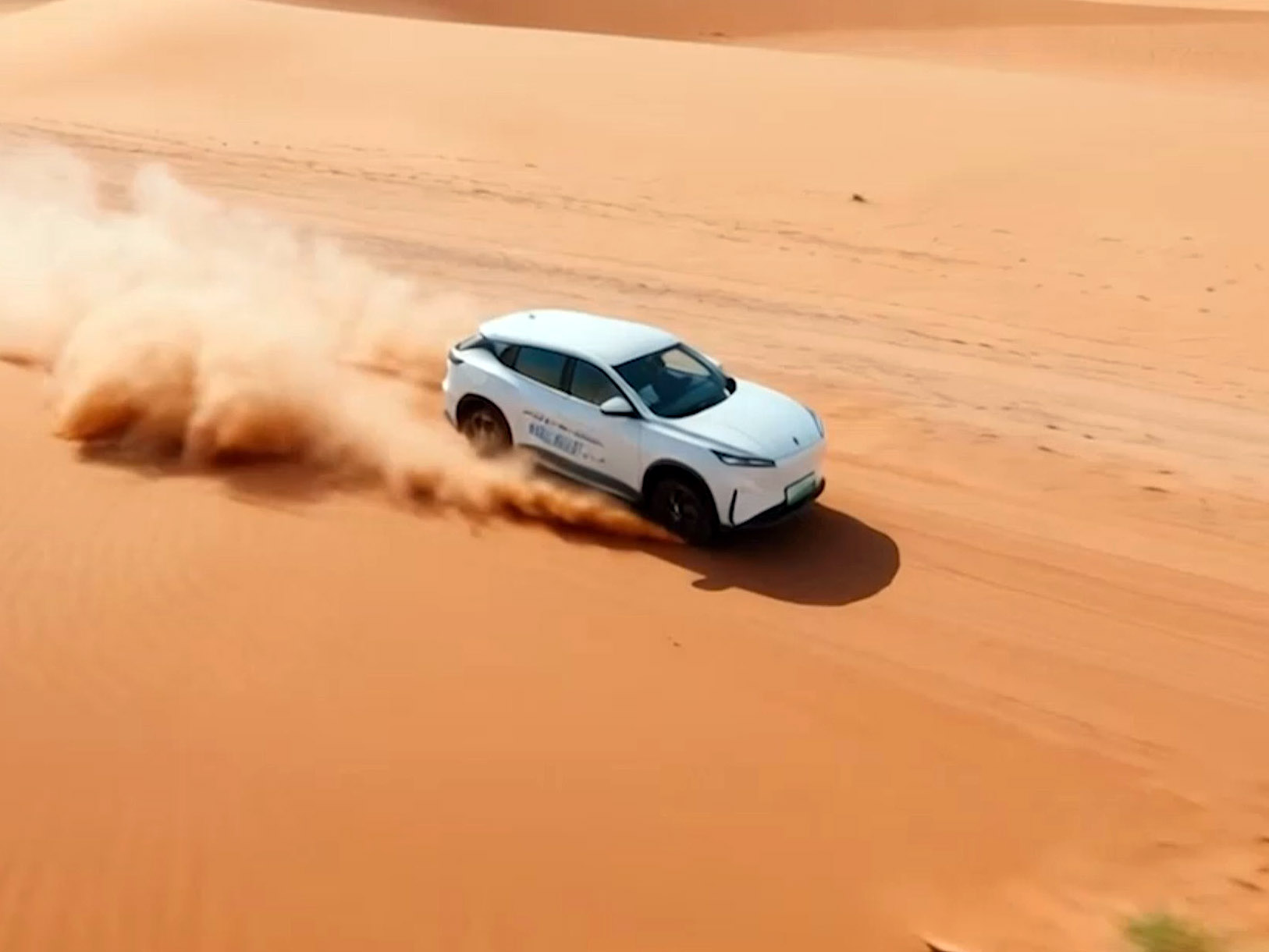
China has introduced the first mass-produced passenger vehicle that relies solely on its domestic BeiDou satellite system, marking a separation from the U.S.-based Global Positioning System (GPS) for in-car navigation. The move positions China among a small group of global entities able to support independent consumer navigation networks on an industrial scale.
The launch model, Dongfeng’s Sky EV01, is a midrange electric SUV priced from around US$16,700 in the Chinese market. By using BeiDou exclusively, the vehicle does not access GPS or other foreign navigation sources. The system offers expanded satellite coverage and supports two-way communication, enabling navigation and emergency contact capabilities even in remote areas with poor traditional signal reception.
See also: Dongfeng Solid-State Battery Clears Tests Ahead of 2026 Production
According to Dongfeng, the switch to BeiDou is part of a broader corporate strategy to enhance national data sovereignty. The company says the Sky EV01 is engineered to store navigation data locally rather than transmitting it to external systems, thereby preventing sensitive details such as vehicle location or destination from being routed through foreign networks. The automaker argues that this design builds a protective framework for vehicle information security from the hardware level upward.
The company also describes the vehicle as an example of a new phase in China’s smart-car development, shifting from a focus on integrated driving functions toward autonomy and safety in data handling. As the first mass-market car to adopt BeiDou as its only navigation source, the Sky EV01 is seen as a significant milestone in reducing technological dependence on overseas platforms.
See also: BMW iX3 Exceeds EPA Range Estimate in Controlled Real-World Test
Industry observers note that while the Sky EV01 is currently targeted at domestic buyers, the broader trend of integrating BeiDou into commercial vehicles could influence the international electric-vehicle market as Chinese automakers expand globally.
Source: Hubei Daily