
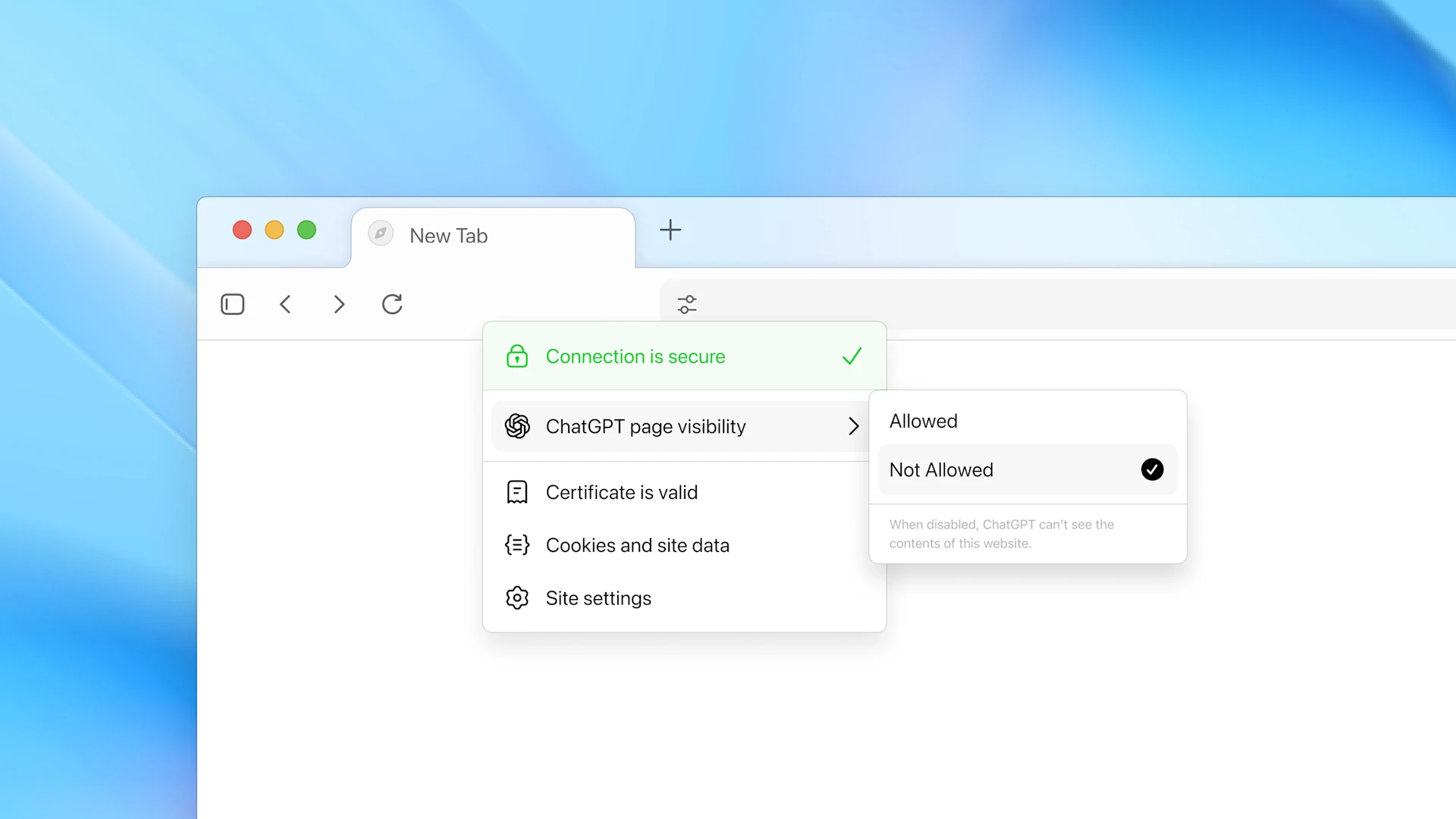
OpenAI introduced a new web browser, ChatGPT Atlas, designed to integrate the company’s conversational AI directly into users’ online experiences. The launch, announced on October 21, 2025, marks OpenAI’s latest move to expand ChatGPT’s reach beyond the traditional chat interface and into daily web use.
The company said Atlas reimagines web browsing by embedding ChatGPT into the browser window, allowing the AI to understand user context, assist with tasks, and recall prior interactions. “AI gives us a rare moment to rethink what it means to use the web,” OpenAI stated in the announcement, highlighting that Atlas combines browsing, memory, and assistance in one platform.
ChatGPT Atlas includes features such as browser memories, which allow the model to recall details from websites visited and apply that context in future sessions. These memories are optional and can be viewed, archived, or deleted at any time. The company emphasized that user control and privacy remain central to the product, adding that browsing data will not be used to train its models unless users explicitly opt in.
The browser also introduces “agent mode,” enabling ChatGPT to take direct actions on websites—such as researching, summarizing information, or even performing tasks like online shopping and event planning. OpenAI said the feature, now available in preview for Plus, Pro, and Business users, was built with multiple safety checks, including restrictions on code execution and activity on sensitive sites.
ChatGPT Atlas launches globally on macOS for Free, Plus, Pro, and Go users, with Windows, iOS, and Android versions planned. The company described the release as a major step toward a “super-assistant” future, where intelligent agents handle routine browsing tasks while keeping users in control of their information.
Source: OpenAI