
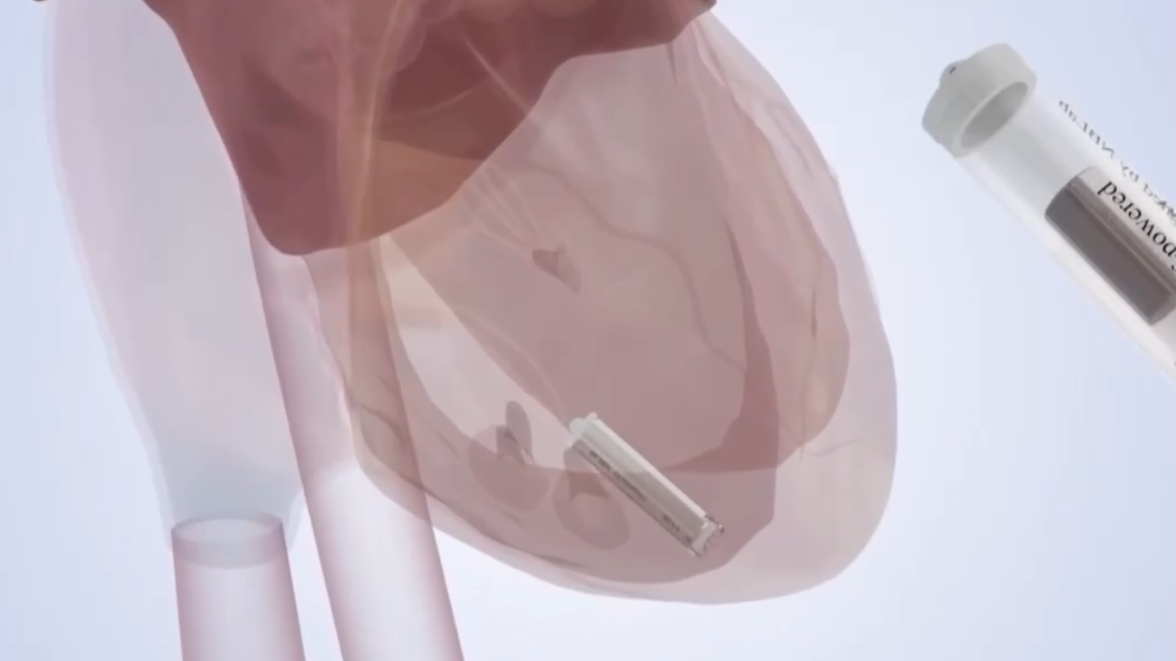
Chinese scientists have developed a capsule-sized pacemaker that generates electricity from the heart’s own motion, a technology that could eliminate the need for battery replacement surgeries commonly required with existing cardiac implants.
The device, described in a study published in Nature Biomedical Engineering, addresses a long-standing limitation of traditional pacemakers, which typically rely on batteries that last around 10 years. Once depleted, those batteries require surgical replacement, increasing medical risks and costs for patients.
See also: Clair Health Introduces Wristband Aimed at Continuous Hormone Monitoring
Developed over seven years by a research team from the University of Chinese Academy of Sciences, Tsinghua University and Peking University, the new pacemaker converts the kinetic energy of heartbeats into electrical power using electromagnetic induction. A simplified magnetic levitation system was added to reduce friction and improve durability during long-term operation.
Laboratory tests simulating roughly 300 million heartbeats — equivalent to about a decade of use — showed limited mechanical wear, while the device generated an average output of 120 microwatts, well above the level needed to sustain stable pacing. The leadless implant is designed to be inserted via a minimally invasive catheter through the femoral vein.
See also: OpenAI Introduces ChatGPT Health With Focus on Privacy and Personal Data Control
Ouyang, an associate professor at the University of Chinese Academy of Sciences and lead author of the study, said the goal is to bring the technology to clinical trials before 2030 and eventually offer a lower-cost alternative to imported pacemakers, calling the approach “symbiotic bioelectronics” that could also be adapted for other implantable medical devices.
Source: CGTN