
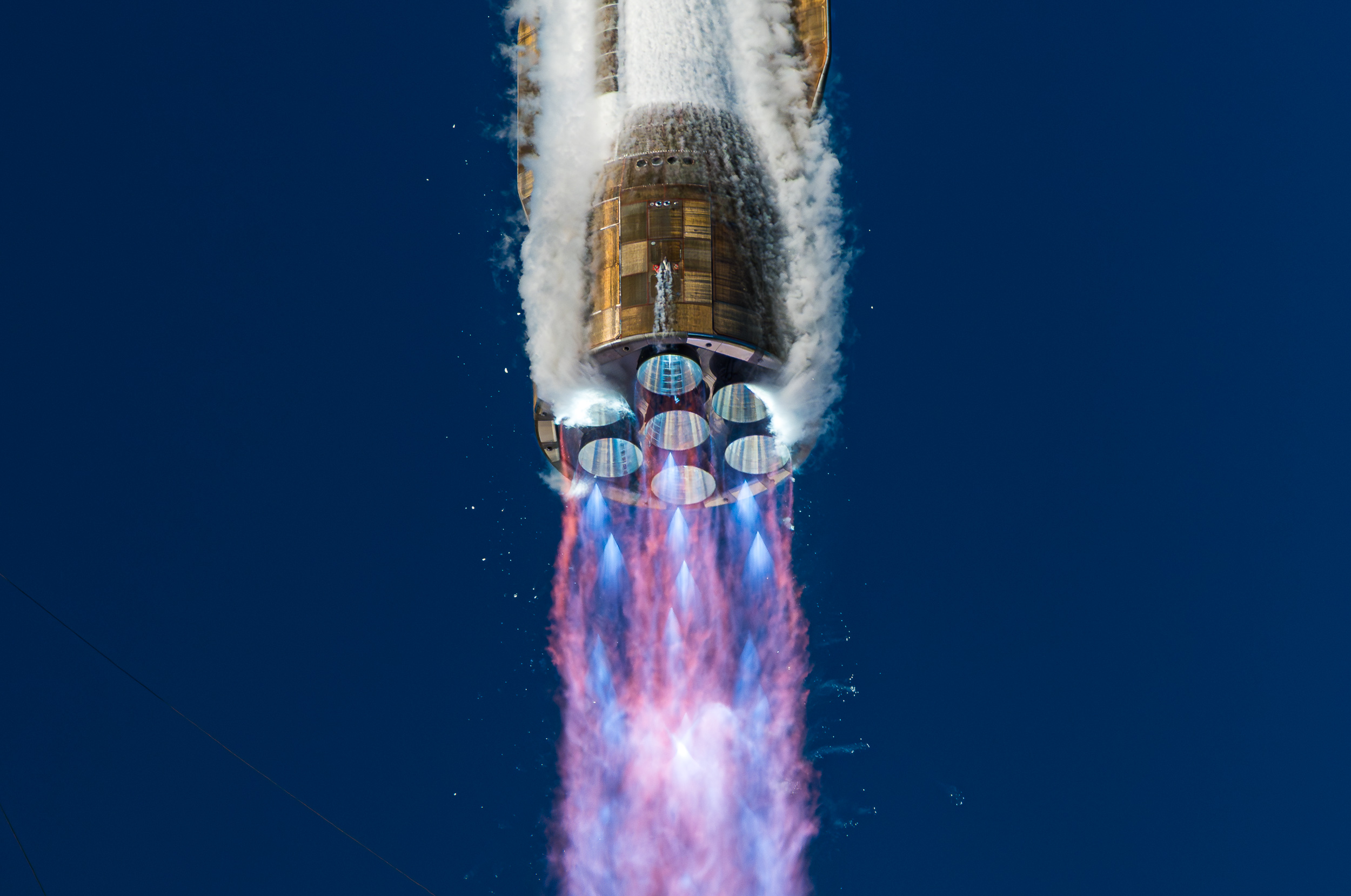
Blue Origin’s New Glenn rocket completed its second orbital mission on Thursday, deploying NASA’s ESCAPADE twin-spacecraft and successfully landing its reusable first-stage booster on the recovery vessel Jacklyn in the Atlantic Ocean. The launch took place from Cape Canaveral Space Force Station at 3:55 p.m. EST.
The mission marked another step in Blue Origin’s push to establish New Glenn as a heavy-lift vehicle capable of frequent reusability. The rocket’s seven BE-4 engines powered it to orbit, where the ESCAPADE probes were released into a loiter trajectory ahead of their journey to Mars. The spacecraft will begin transit in late 2026, when Earth and Mars reach the next optimal alignment.
See also: NASA Plans 2026 Launch for SunRISE Mission to Study Solar Radio Bursts
ESCAPADE, a heliophysics mission, is intended to study the interaction between the solar wind and Mars’ magnetic environment and how these processes influence atmospheric loss. The flight also carried Viasat’s HaloNet demonstration, which completed an initial in-orbit test of a telemetry relay system intended to support NASA’s future communications services.
U.S. space officials signaled that data from the mission will support preparations for upcoming crewed and uncrewed operations, including programs connected to Artemis and efforts aimed at strengthening national space capabilities. The flight also contributed to New Glenn’s certification process under the National Security Space Launch program.
See also: Europe Strengthens Space Infrastructure with New Deep Space Station
Blue Origin stated that New Glenn remains central to its long-term plans, which include supporting sustained lunar operations, enabling in-space resource activities, and providing multi-orbit transport through its Blue Ring platform. The company has multiple New Glenn vehicles in production and several years of contracted missions involving NASA, Viasat, Amazon’s Project Kuiper, AST SpaceMobile and other commercial operators.
Company officials said the latest mission demonstrated progress in manufacturing and launch-readiness workflows, emphasizing an intention to increase flight frequency as additional vehicles come online.
Source: Blue Origin