
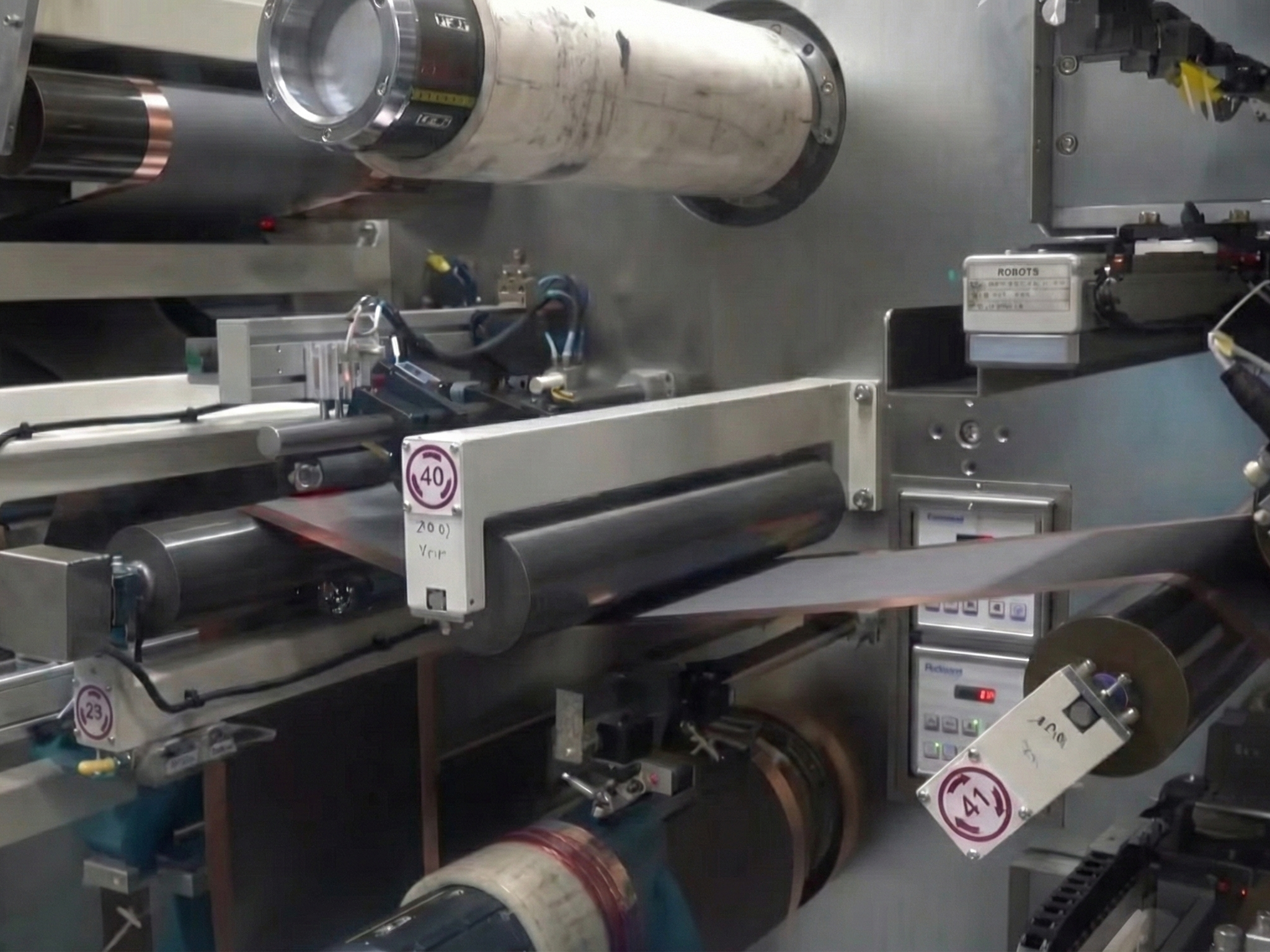
China’s GAC Group has completed what it says is the country’s first production line capable of manufacturing automotive-grade all-solid-state batteries with capacities above 60 Ah. The new facility, which is undergoing small-batch testing, positions GAC as the first Chinese automaker to reach this level of solid-state battery production capability.
According to the company’s research director, Qi Hongzhong, the energy density of the new cells is nearly twice that of conventional lithium-ion batteries. He said vehicles that currently achieve around 500 km of driving range under China’s CLTC test cycle could surpass 1,000 km with the upgraded cells. The original article noted that these estimates, based on CLTC testing, typically translate to roughly 650–750 km in real-world conditions, highlighting differences between global certification standards.
See also: Dongfeng Solid-State Battery Clears Tests Ahead of 2026 Production
The batteries feature an areal capacity of 7.7 mAh/cm², compared with less than 5 mAh/cm² for conventional designs. GAC says the solid-state architecture, which replaces liquid electrolytes with solid materials, improves thermal stability and safety. The documentation indicates the solid electrolyte can tolerate temperatures of 300–400°C, substantially higher than the limit for traditional lithium-ion systems.
GAC also reports progress in manufacturing efficiency. Its negative-electrode “dry process” merges three production stages — slurry preparation, coating, and rolling — into a single step. The company claims this reduces energy consumption and lowers manufacturing complexity, potentially cutting costs as the technology scales.
See also: Tesla Expands Dynamic Supercharger Pricing Across More Than 550 U.S. Locations
Under GAC’s roadmap, small-batch vehicle integration and testing are expected in 2026, with gradual expansion toward mass production between 2027 and 2030. Analysts note that while the technical milestone is significant, long-term validation and supply-chain readiness will determine commercial viability. The development aligns with China’s broader “Energy-Saving and New Energy Vehicle Technology Roadmap 3.0,” which forecasts global large-scale adoption of solid-state batteries by 2035.
Source: CNR