
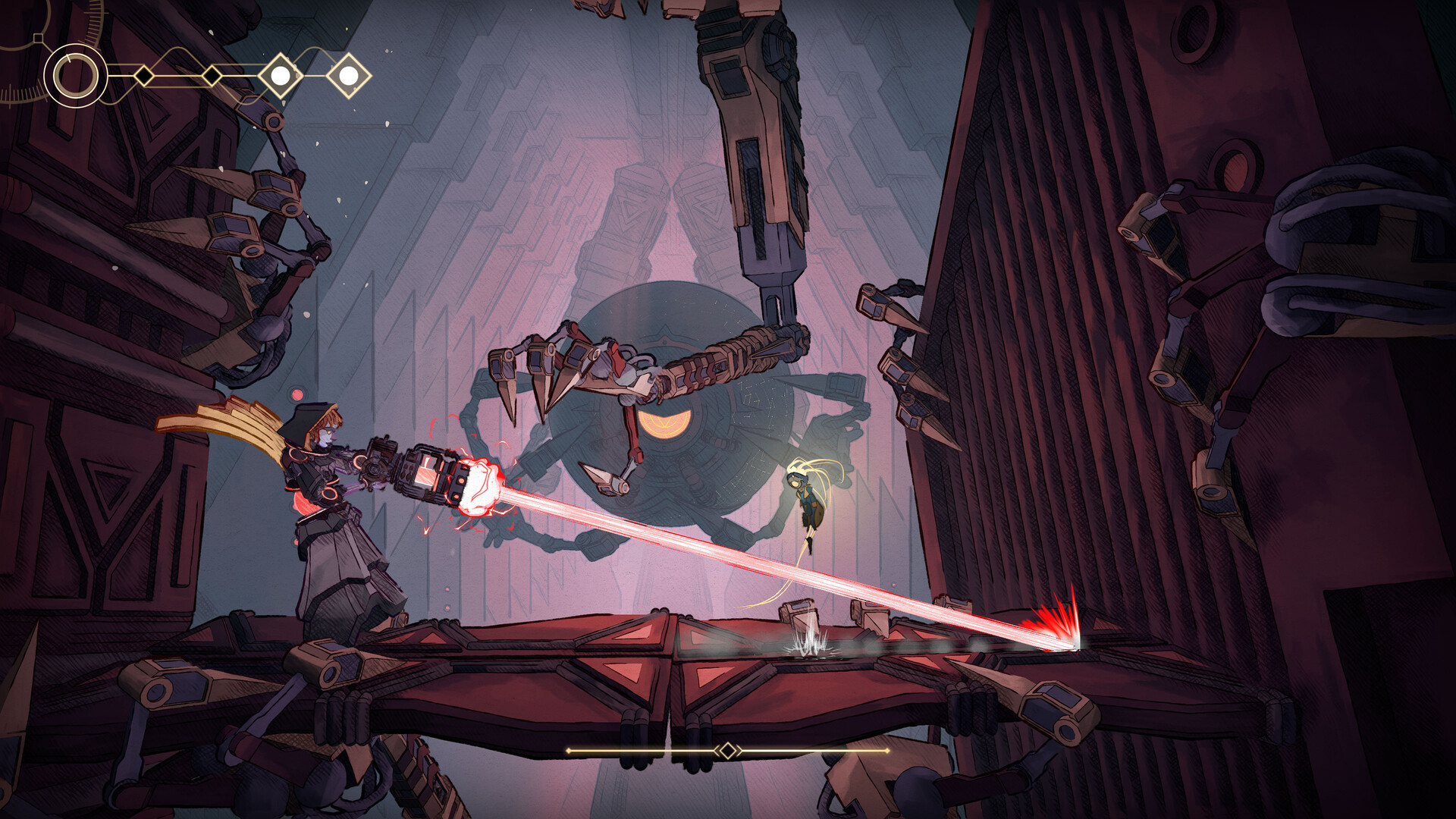
MIO: Memories in Orbit, a Metroidvania developed by French indie studio Douze Dixièmes, launched on Steam on Jan. 20 with a strong early reception, securing an 87% “Very Positive” rating from players despite mixed reactions to some of its design choices.
Published by Focus Entertainment, the game was released after a brief one-month delay to finalise optimisation for high-end PCs and Nintendo’s upcoming Switch 2 hardware. The title has stood out in a crowded genre thanks to its proprietary engine, which the developers describe as delivering a “comic-book/watercolor” visual style.
See also: Forbidden Solitaire Adds Narrative Horror to Well-known Card Game
Set aboard a decaying space ark known as The Vessel, the game follows an android protagonist navigating interconnected biomes through precision-based platforming. Movement relies heavily on a grappling hook and wall-climbing mechanics that require strict timing, while combat is shaped by a modular “Modifier” system that allows players to repurpose enemy components into new abilities.
While overall reception has been positive, discussion among players has increasingly focused on controversial late-game mechanics. In particular, some users have criticised a narrative-driven feature that can permanently reduce the character’s health in optional high-difficulty areas, arguing that it discourages exploration in a genre built around it. Another late-game plot point temporarily removes access to shops and resource management, drawing further criticism.
Despite these concerns, the game has been praised for its atmosphere, performance and movement design. The Steam version supports 4K resolution and 60 frames per second on mid-range hardware, with minor adjustments needed for stable play on the Steam Deck. Priced at $17.99 after a launch discount, MIO: Memories in Orbit has quickly positioned itself as an early standout among Metroidvania releases in 2026.