
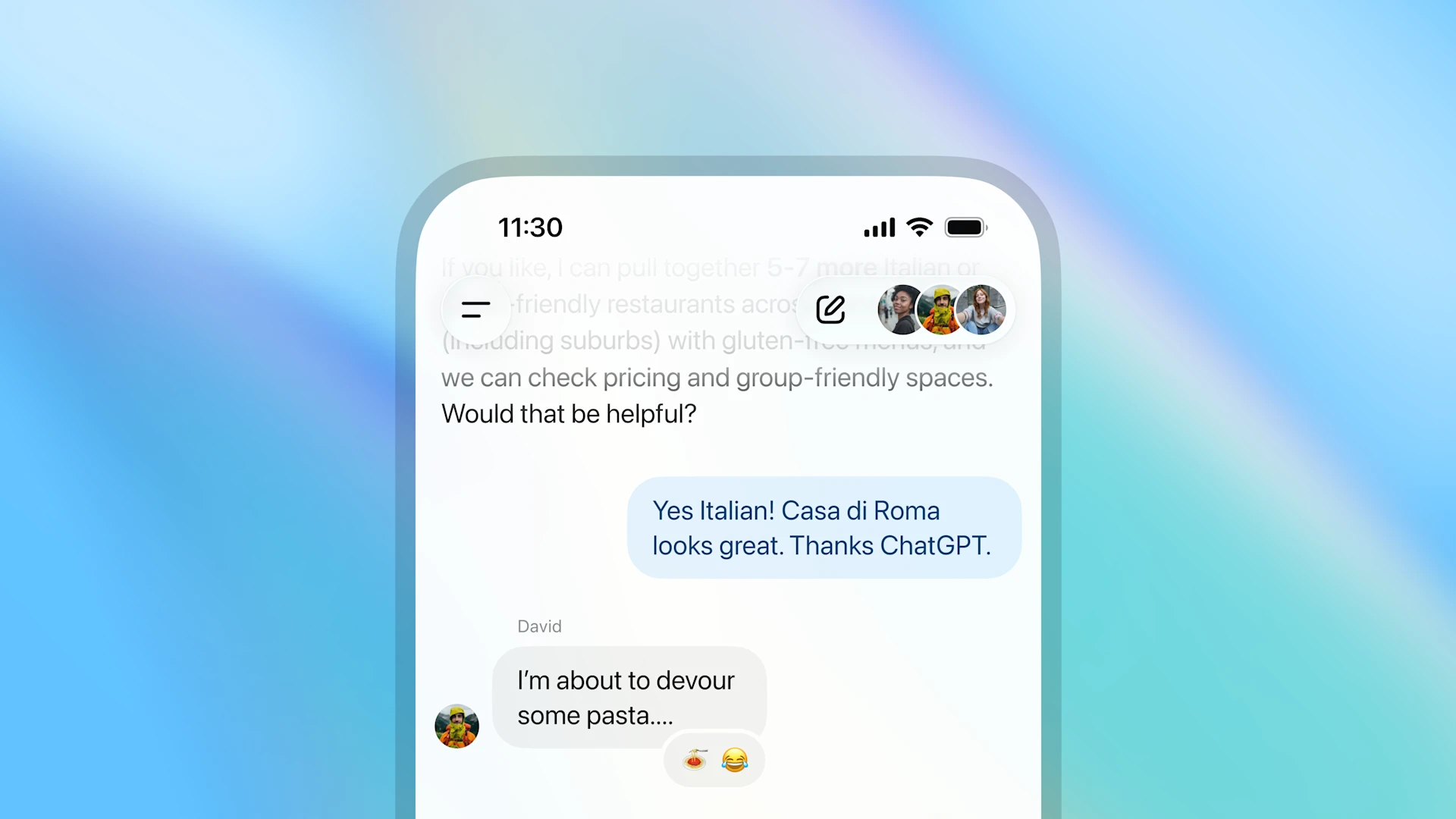
OpenAI has launched a pilot of its new group chat feature, allowing multiple users to collaborate alongside ChatGPT in a shared conversation. The test began on Nov. 13, 2025, and is available to logged-in users across the Free, Go, Plus and Pro plans in Japan, New Zealand, South Korea and Taiwan. The company said the feature is intended to “make it easy for people to collaborate with each other—and with ChatGPT—in the same conversation.”
The new tool is designed for group planning, decision-making and brainstorming. OpenAI said group chats are kept separate from private conversations and emphasized that “your personal ChatGPT memory is never shared with anyone in the chat.” Use cases highlighted in the announcement include coordinating trips with friends, working through home projects with family members and drafting documents with colleagues.
See also: OpenAI Unveils GPT-5.1 With Smarter Reasoning and More Natural Conversations
Group chats function similarly to standard ChatGPT conversations, but with multiple participants. Users can start a group chat by tapping the people icon in any thread, with up to 20 invitees able to join via shared links. When participants are added, the system automatically creates a duplicate thread to preserve the original conversation. The feature runs on GPT-5.1 Auto and supports search, file uploads, image generation and dictation.
OpenAI said ChatGPT has been trained with new social behaviors for multi-user settings, allowing it to decide when to engage and when to remain quiet. The assistant can react to messages with emojis and use profile photos to generate personalized images for the group. Participants can manage settings by renaming the chat, adjusting membership or setting custom instructions for how the assistant should respond.
See also: OpenAI Reaches One Million Business Customers, Expands Tools for Enterprise AI Adoption
Privacy controls are central to the pilot. Group chats do not access or create personal memory, and users must accept invitations before joining. All participants can see who is present or leave at any time. Additional safeguards apply when minors are involved, including reduced exposure to sensitive content and the option for parents to disable group chats entirely.
Source: OpenAI