
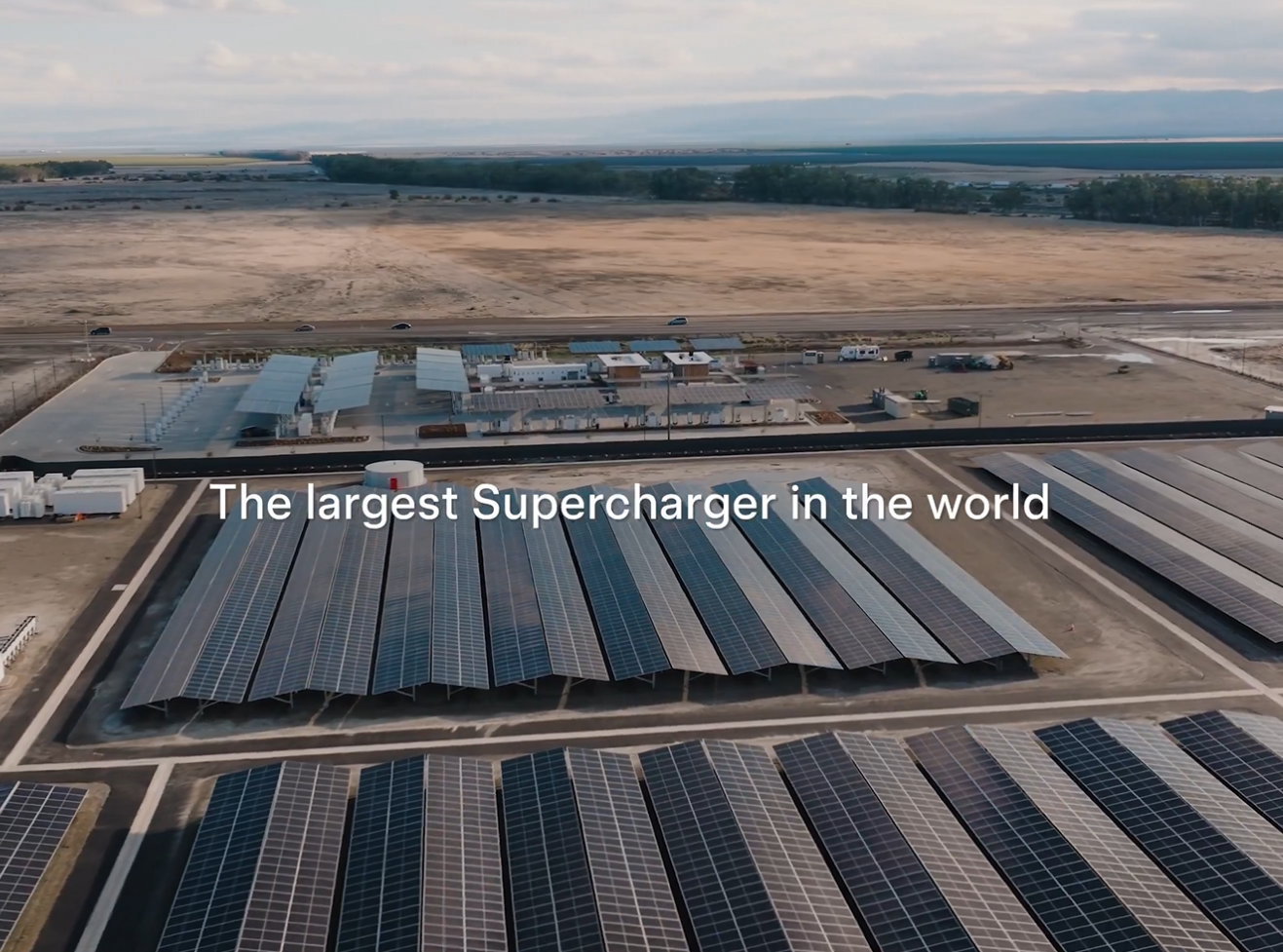
Tesla has opened what it calls the world’s largest Supercharger station in Lost Hills, California, completing the final phase of activation ahead of the Thanksgiving travel period. The site contains 168 charging stalls, making it the biggest of its kind globally. When it first opened ahead of the July 4 travel surge, only half of the stalls were operational, but all are now powered.
According to Tesla, the site runs exclusively on solar generation and battery storage rather than the local grid. The company stated that ten Megapack units with a combined storage capacity of 39 MWh supply up to 11 MW of solar power to support charging demand. A limited utility connection exists only to support potential future expansion rather than to power the current installation. The original article noted that Tesla viewed the station as a solution to an anticipated shortage of charging capacity on the busy San Francisco–Los Angeles route during peak travel periods.
The location includes 12 pull-through stalls designed for vehicles towing trailers, allowing charging without unhitching. Tesla has been testing larger-format layouts amid growing demand from long-distance drivers and commercial EV users. The configuration aligns with the company’s effort to grow infrastructure around long-range and heavy-load travel.
Tesla completed the site in less than eight months. The company attributed the pace partly to its increased use of prefabricated Supercharger hardware and a new installation method that avoids concrete pouring. The original report described these advancements as enabling construction “much faster and cheaper than the competition.”
See also: Tesla Expands Dynamic Supercharger Pricing Across More Than 550 U.S. Locations
California continues to be Tesla’s most concentrated market for public charging infrastructure, and the station is expected to play a strategic role during high-traffic travel seasons. Analysts say the reliance on solar and storage also illustrates the company’s broader focus on reducing delays associated with grid interconnection at new charging sites.