
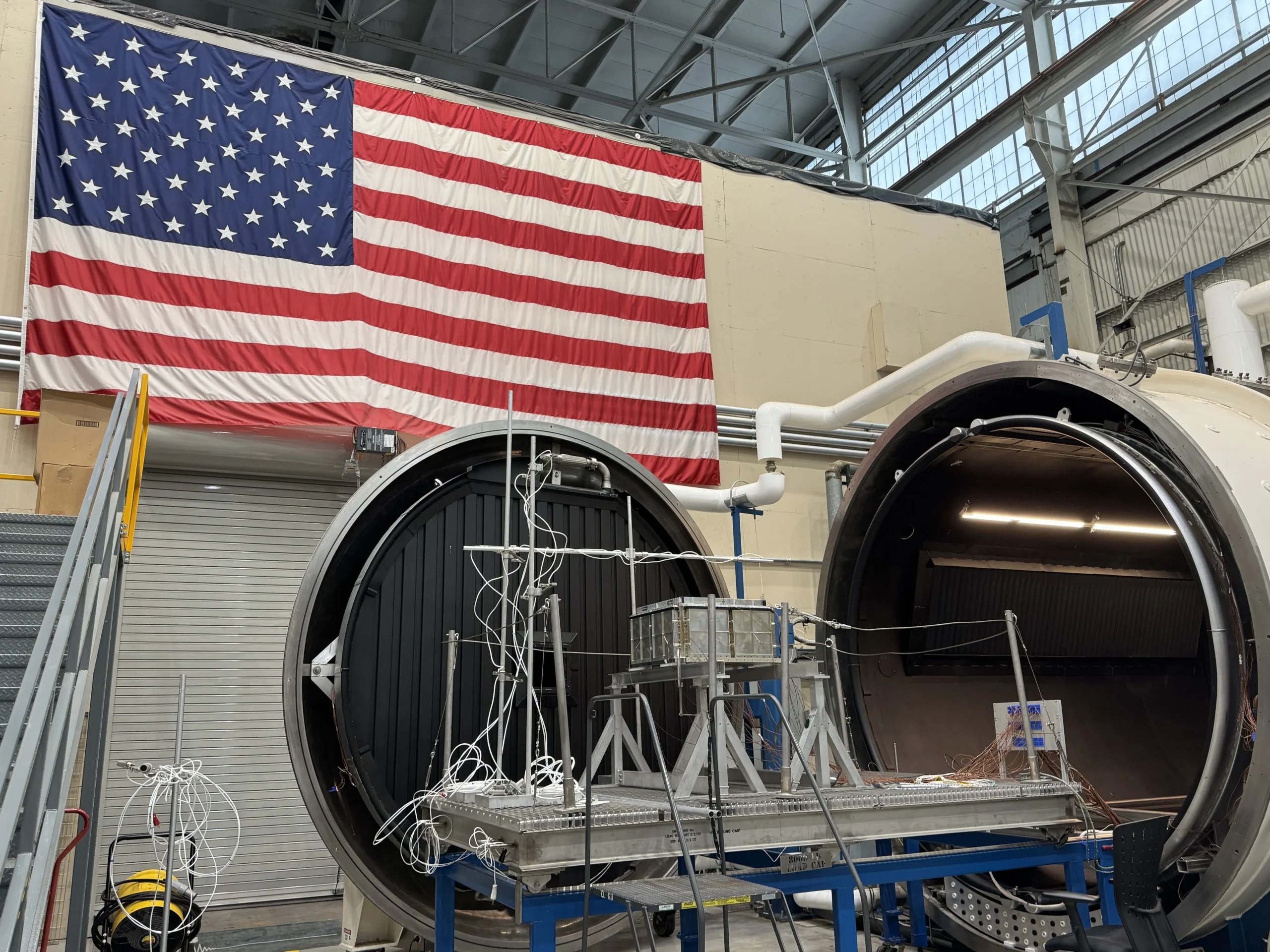
NASA’s StarBurst mission has completed a series of thermal and vibration tests, moving the space-based observatory closer to launch readiness as it prepares to study some of the most powerful events in the universe, the U.S. space agency said.
StarBurst is designed to detect the initial flashes of short gamma-ray bursts generated by neutron star mergers, violent cosmic collisions that scientists believe are responsible for forming most of the universe’s heavy metals, including gold and platinum. These bursts rank among the most energetic explosions known.
See also: Mars Express Image Shows Wind-carved Formations Shaped by Sandblasting on Mars
The mission is intended to complement Earth-based observatories that already detect gravitational waves from such mergers by capturing gamma-ray signals at the same time. NASA said this combined approach could provide a more complete picture of how these extreme events unfold.
According to the agency, StarBurst recently passed environmental testing at NASA’s Marshall Space Flight Center, including exposure to extreme temperatures in a vacuum chamber and vibration tests that simulated the stresses of launch. “The thermal testing occurred in a vacuum chamber,” the article noted, adding that it reproduced both the hottest and coldest conditions expected in space.
See also: NASA’s Pandora Satellite Begins Mission to Clarify Exoplanet Atmosphere Signals
The instrument will next undergo calibration as NASA targets a launch as early as 2027, timed with a new observing run of the Laser-Interferometer Gravitational Wave Observatory. Scientists estimate that StarBurst could help detect up to 10 neutron star mergers per year with both gamma rays and gravitational waves, compared with just one such joint observation to date.
Source: NASA