
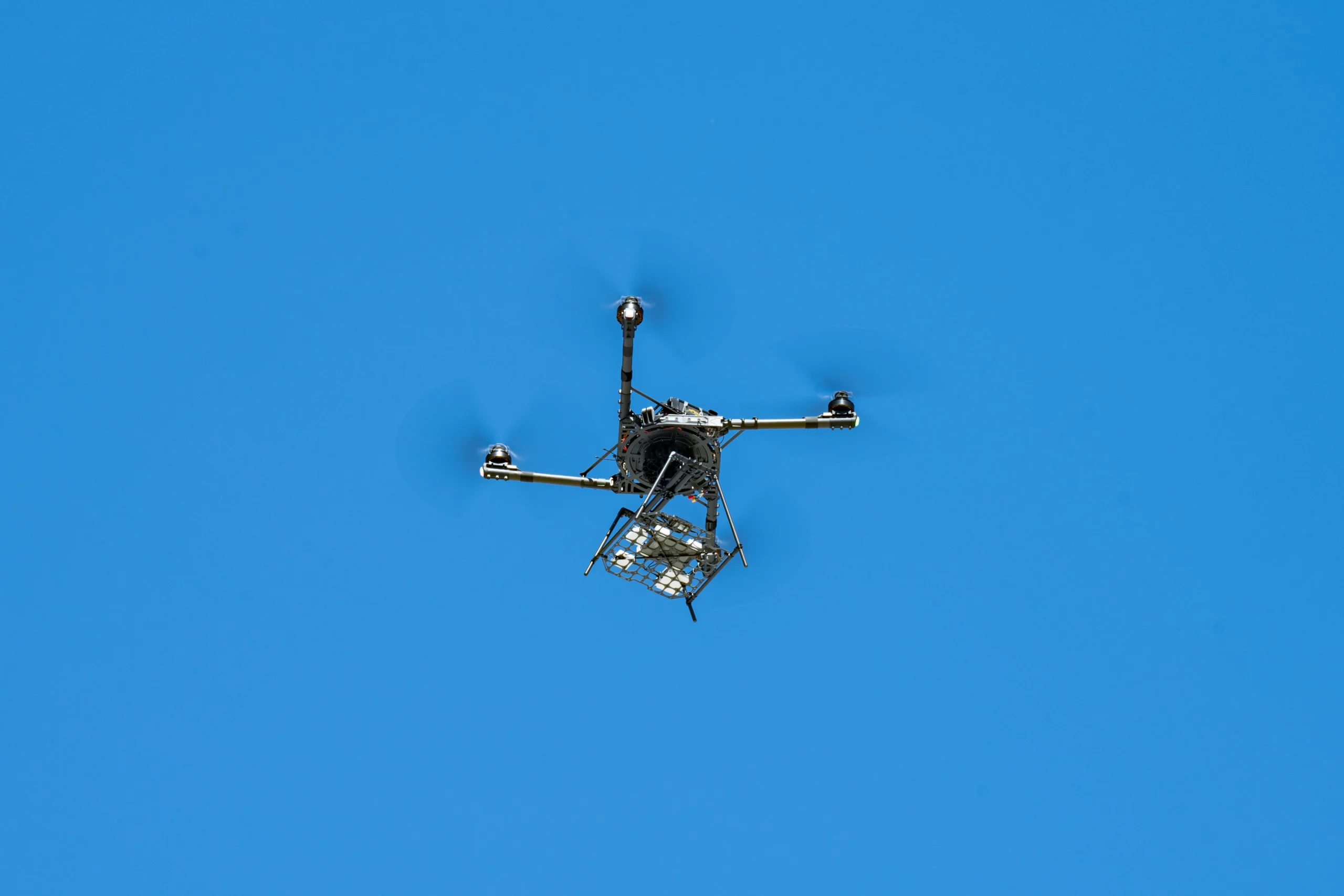
NASA researchers have tested a blockchain-based system designed to protect flight data and reduce the risk of cyber interference in future air traffic management, following a drone flight demonstration at the agency’s Ames Research Center in California.
The test examined whether blockchain technology could securely transmit and store flight information in real time between aircraft and ground systems, addressing concerns that evolving cyberthreats could disrupt aviation operations. Researchers said the system was able to maintain data integrity and transparency without relying on a single, centralised database.
See also: NASA Satellite Imagery Supports Oyster Aquaculture in Maine
“Blockchain operates like a decentralized database — it does not rely on a single computer or centralized system,” NASA said in a statement, adding that every change to the data is recorded and verified across a shared network to ensure it remains accurate and trustworthy.
During an August flight test, the research team used an Alta-X drone equipped with custom hardware and software to simulate real-world operating conditions, including communication with a separate ground control station. The system used an open-source blockchain framework to securely share information such as flight plans, registration data and telemetry, while restricting access to approved users.
See also: NASA-Supported HydroFlame Tool Targets Post-Wildfire Water Hazards
NASA said the results suggest the approach could support emerging aviation areas such as autonomous air traffic management, urban air mobility and high-altitude operations. Researchers will continue analysing the data from the test as part of NASA’s broader effort to develop tools that improve the safety, resilience and efficiency of U.S. aviation systems.
Source: Nasa