
Close Menu
    Facebook X (Twitter) Instagram Threads
    Teknowire
    • Home
    • News
      • Business
        • Tech Startups
        • Corporate Strategies
        • Market Trends
        • Investments
      • Breaking Tech News
      • Policy
      • Industry Announcements
      • Mergers & Acquisitions
    • AI
      • AI Innovations
      • Ethics & Regulations
      • ML & Automation
      • Robotics & Drones
    • Internet
      • Social Media
      • Digital Marketing
      • Web Development
      • Streaming
    • Device
      • Accessories
      • Laptops
      • PC
      • Smartphone
      • Smartwatch
      • Tablet
    • Game
      • Esports
      • Game Reviews
      • Mobile Gaming
      • PC & Console Gaming
    • Apps
      • Cybersecurity
      • Mobile Apps
      • Operating Systems
      • Productivity Tools
      • Web & Cloud Services
    • Transportation
      • Electric Vehicle
      • Autonomous & Connected Vehicles
      • Battery & Charging
      • E-Bikes & E-Scooters
    • Science
      • Biotechnology
      • Quantum Computing
      • Space Exploration
      • Sustainable Tech
    • Others
      • Guide
      • How To
    Subscribe
    Teknowire
    Home » Transportation » Electric Vehicle » Recycled Tyres Could Hold the Key to Quieter Electric Vehicles, German Researchers Find
    Electric Vehicle

    Recycled Tyres Could Hold the Key to Quieter Electric Vehicles, German Researchers Find

    Innovative particle-based damping system cuts electronic noise in EVs while giving discarded tyres a second life
    By Linda JasmineJune 14, 2026No Comments4 Mins Read
    Share Facebook Twitter Pinterest LinkedIn Tumblr Email Copy Link
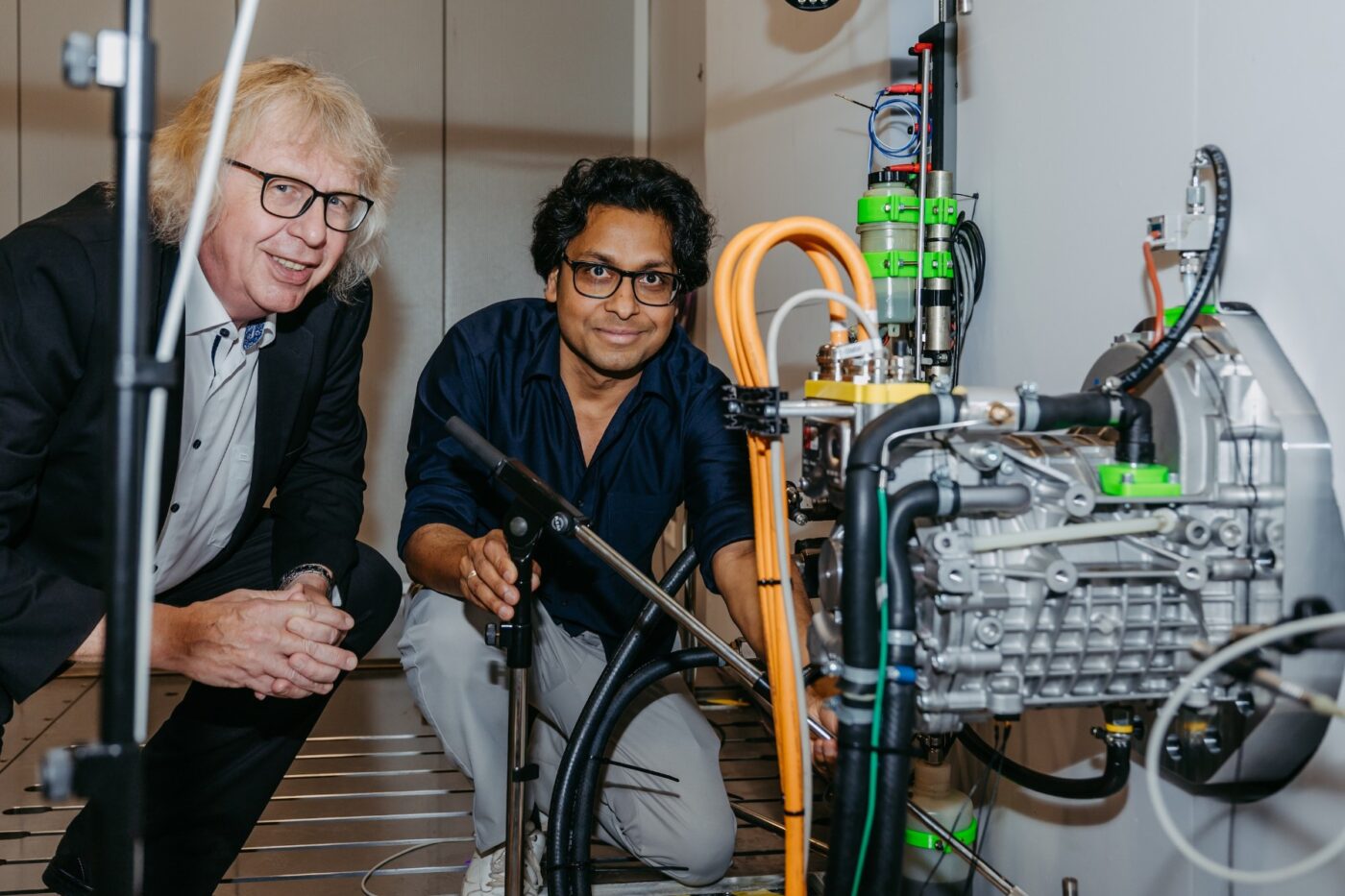
    Credit: Uni Magdeburg
    Share
    Facebook Twitter LinkedIn Pinterest Email Copy Link

    Electric vehicles are often praised for their near-silent operation, yet many drivers are familiar with the subtle humming, whistling and high-frequency sounds generated by electric drivetrains and power electronics. Researchers in Germany believe they have found an unexpected way to make future EVs even quieter—by using material recovered from worn-out vehicle tyres.

    A research team at Otto von Guericke University Magdeburg has developed a vibration-damping technology that uses granulated recycled tyre rubber to absorb noise-producing vibrations inside electric vehicle components. The approach not only improves acoustic comfort but could also create a new high-value application for millions of tyres reaching the end of their service life each year.

    Giving Old Tyres a New Purpose

    Unlike conventional vehicles, electric cars produce far less engine noise, making other sounds more noticeable to occupants. Components such as inverters, converters and power electronics can generate vibrations that translate into audible tones, particularly at higher frequencies.

    Traditionally, manufacturers have addressed these issues using insulation materials and sound-absorbing mats. While effective, these solutions increase weight and add complexity to vehicle design.

    The Magdeburg researchers pursued a different strategy. Instead of blocking sound after it is generated, they focused on preventing vibrations from developing in the first place.

    Their solution involves filling existing cavities within electronic components with specially engineered particles made from recycled tyre rubber. As vibrations occur, the particles move and interact with one another, dissipating energy before it can be converted into noise.

    Significant Noise Reduction in Laboratory Tests

    Testing showed that the particle-based system can substantially reduce both vibration and sound levels in critical operating ranges.

    According to the research team, the technology lowered noise levels by up to 6.5 decibels while reducing vibration amplitudes by as much as 9.7 decibels on selected component surfaces.

    Because the damping material can be integrated into unused spaces already present within electronic housings, the system requires minimal structural modification and adds little additional weight.

    Researchers say this could make the technology attractive for future electric vehicle platforms where efficiency, packaging space and cost remain key design priorities.

    More Than a Simple Filling Material

    Developing the system proved more complex than simply inserting rubber particles into a component.

    The effectiveness of the damping process depends on multiple variables, including particle size, quantity, temperature, component geometry and vibration frequency.

    “Particles behave very differently depending on their size, material, filling quantity, temperature, component geometry, and excitation. That’s why simply filling a component with granulate isn’t enough. We must calculate and test which particles, in what quantity and at which location, achieve the best results,” explained Dr.-Ing. Braj Bhushan Prasad.

    The team is now developing predictive design tools that could help engineers determine the optimal particle configuration for specific vehicle applications.

    A New Approach to EV Refinement

    Researchers believe the technology could eventually be used across a broad range of electric vehicle systems, including power electronics, inverters, control modules and other components susceptible to vibration-induced noise.

    Beyond improving passenger comfort, the approach also supports sustainability objectives by creating a new use for recycled tyre materials.

    “Our findings show that even small particles made from recycled tyre rubber can make a noticeable difference in reducing noise in electric vehicles,” said Professor Hermann Rottengruber.

    “We now aim to develop this into a tool for designing future electric vehicles, so they not only drive cleaner but also sound more pleasant.”

    As electric vehicles continue to evolve, reducing unwanted electronic noise is becoming an increasingly important aspect of vehicle refinement. The researchers’ work suggests that one of the industry’s future solutions may come not from new materials, but from finding innovative ways to reuse existing ones.

    Source: EVMagz

    Acoustic Engineering Automotive Engineering Automotive Innovation Automotive Research Battery Electric Vehicles Circular Economy Clean Transportation Electric Drivetrain Electric Mobility Electric Vehicles EV Components EV Noise EV Technology Future Mobility Germany Green Technology Inverter Technology Materials Science Noise Reduction Otto von Guericke University Magdeburg Power Electronics Recycled Rubber Recycled Tyres Sustainable Manufacturing Sustainable Materials Tire Recycling Vehicle Acoustics Vehicle Comfort Vibration Damping
    Follow on Google News Follow on Flipboard
    Share. Facebook Twitter Pinterest LinkedIn Tumblr Telegram Email Copy Link
    Previous ArticleEricsson Unveils AI-Powered RAN Software to Enhance 5G Networks
    Next Article CATL Invests in Nuclear Fusion Startup Beta Fusion
    Linda Jasmine

    Studied in marketing. Linda has been covering the smartphone scene since 2010 with focus in iPhone and Android phone.

    Related Posts

    Amazon Secures 600 MW of Power From Germany’s Largest Planned Baltic Sea Wind Farm

    June 20, 2026

    CATL Invests in Nuclear Fusion Startup Beta Fusion

    June 15, 2026

    AWS Says Data Centers Are Seven Times More Water-Efficient Than Industry Average

    June 13, 2026
    Add A Comment
    Leave A Reply Cancel Reply

    Latest Post

    Amazon Secures 600 MW of Power From Germany’s Largest Planned Baltic Sea Wind Farm

    June 20, 2026

    Asus Launches ROG Strix Scar 18 (2026) Globally with 4K 240Hz Mini LED Display

    June 20, 2026

    Eazeye Launches Radiant Monitor 2 with Sunlight-Readable Transflective Display

    June 20, 2026

    Samsung Unveils The Frame Hospitality TV for Hotels with AI Wallpapers and Guest-Centric Features

    June 20, 2026

    Microsoft Confirms New Windows 11 KB5095051 Issues Affecting Office Automation and Enterprise Deployments

    June 20, 2026
    About

    Teknowire is a dedicated technology news portal that delivers the latest insights, trends, and developments shaping the future of innovation. From breakthroughs in consumer electronics and artificial intelligence to emerging startups, software trends, and global tech policy, we bring our readers accurate, timely, and accessible coverage of the world’s most dynamic industry.

    Founded with a mission to simplify complex technology for a broader audience, Teknowire serves professionals, enthusiasts, entrepreneurs, and everyday users who want to stay informed about how technology is transforming business, society, and daily life. We prioritize clarity, depth, and reliability in every story — whether it’s a breaking headline, a product launch, or an in-depth feature.

    Subscribe

    Subscribe to Updates

    Get the latest tech news from Teknowire.

    Policies
    • Ownership & Funding
    • Editorial Policy
    • Privacy Policy
    • Actionable Feedback Policy
    • Artificial Intelligence (AI) Policy
    • Cookie Policy
    • Corrections Policy
    • Diversity Policy
    • Ethics Policy
    Facebook X (Twitter) Instagram Pinterest Threads
    • Home
    • About Us
    • Advertising
    • Privacy Policy
    • Cookie Policy
    • Artificial Intelligence (AI) Policy
    • Contact
    © 2026 Teknowire. Designed by Teknowire.

    Type above and press Enter to search. Press Esc to cancel.

    Go to mobile version