
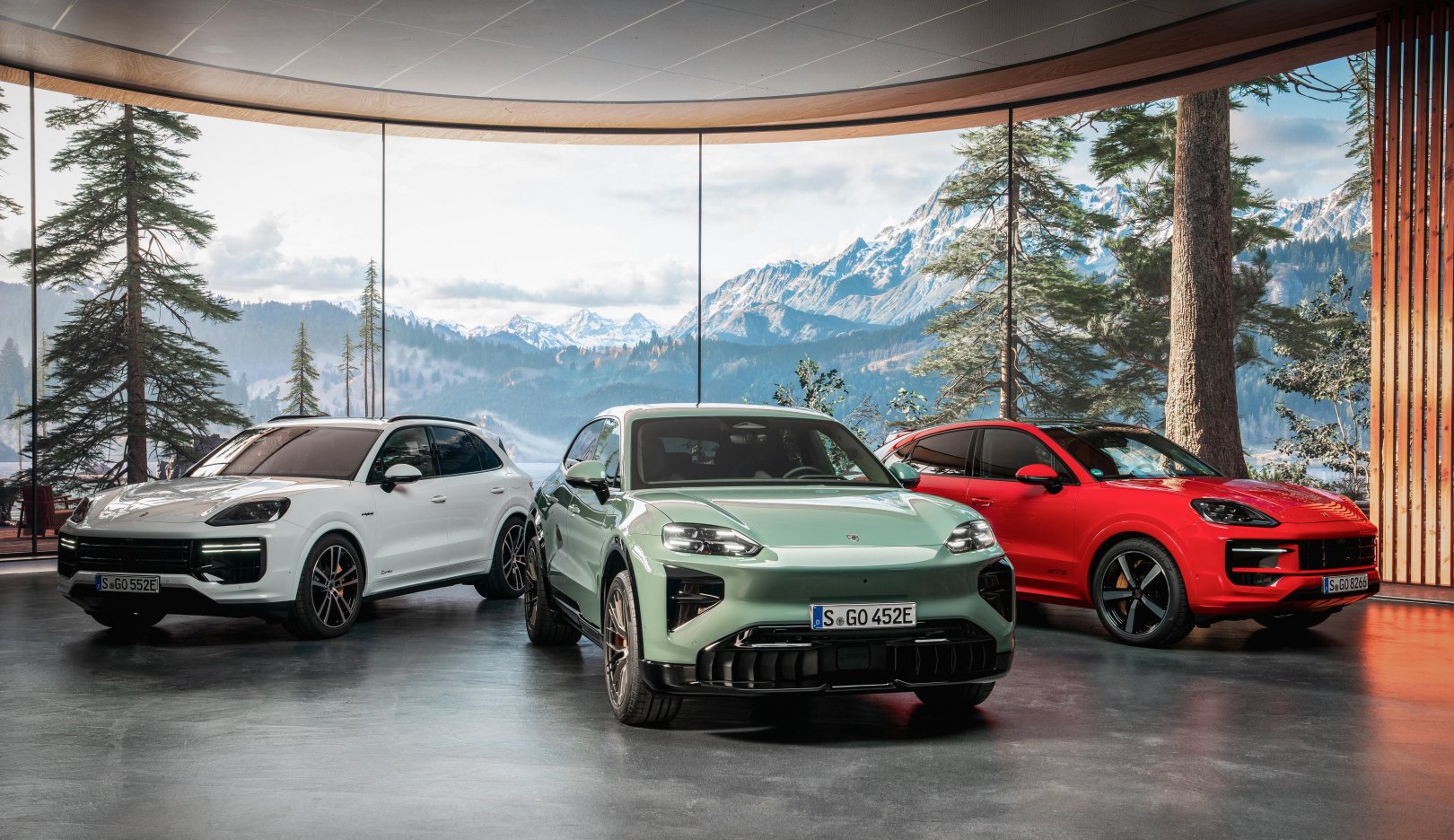
Porsche has introduced its first all-electric Cayenne, a 2026 model that debuts an optional wireless charging system priced at $6,000. The company said the SUV can recharge by simply parking over a dedicated inductive pad installed at home or in open parking areas. “The 2026 Porsche Cayenne doesn’t need to be plugged in to charge at home,” the company noted, adding that the vehicle automatically lowers itself to begin charging.
The system charges at up to 11 kW with 90% energy-transfer efficiency, according to Porsche. The inductive pad includes safety sensors that deactivate the system if small animals or metal objects are detected. Porsche said it is the first automaker to offer a one-box wireless charging solution that requires no wall-mounted controller, as the pad connects directly to a standard power source.
See also: Second-Life Batteries to Power Modular Energy Systems at Porsche Sites
The new Cayenne EV is also the most powerful Porsche to date, with the Turbo trim producing up to 1,139 HP. It uses a 113 kWh battery rated for an estimated 315 miles of range and supports up to 400 kW DC charging, enabling a 10% to 80% recharge in around 16 minutes on Tesla’s V4 Superchargers. Porsche said the model accelerates from 0–60 mph in 2.4 seconds and has a top speed of 162 mph.
Interior features include a curved OLED center display, a 14-inch digital cluster and an optional 15-inch passenger screen. The cabin adds heated surfaces throughout, while a panoramic roof offers adjustable transparency. Porsche’s Active Ride system and 5-degree rear-wheel steering are also available for the first time in a Cayenne.
See also: Dongfeng Wins Approval for World’s First Mass-Produced EV With Four In-Wheel Motors
Porsche plans to release the Cayenne EV in the United States this summer, starting at $111,000 or $165,000 for the Turbo variant. The wireless charging system will be offered at launch. The company said the timing will coincide with expected updates to Tesla’s Robotaxi platform, which may allow comparisons with Tesla’s own wireless charging approach.
Source: Porsche