
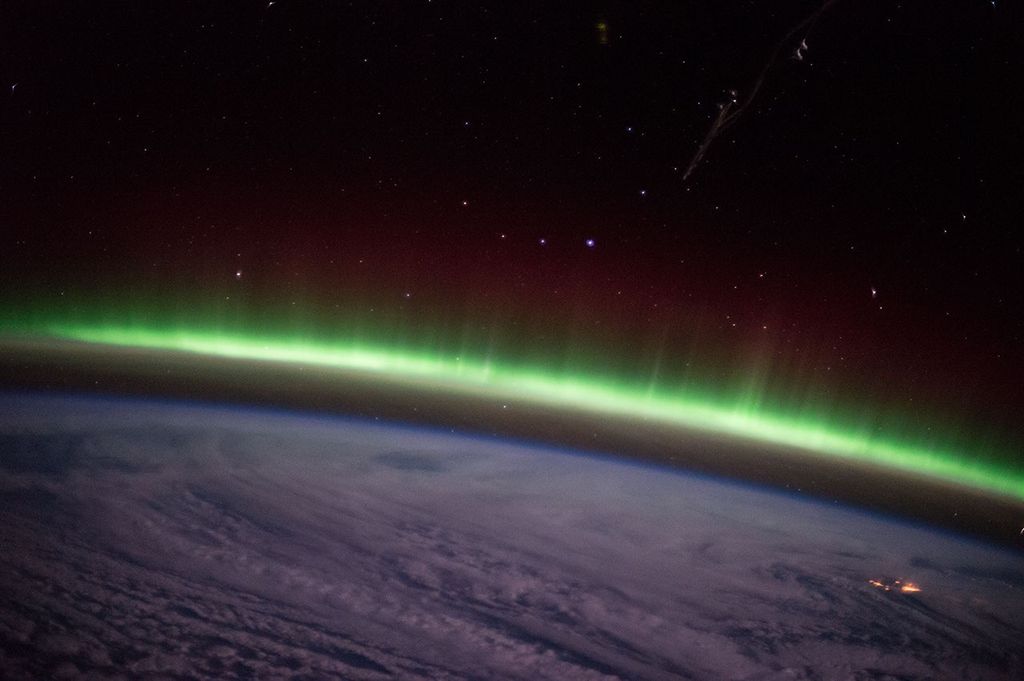
Scientists at Nasa say they may have identified the physical process that powers auroral arcs, a distinctive type of aurora, after analysing archived observations from multiple space- and ground-based instruments.
Auroras form when charged particles from space collide with Earth’s upper atmosphere, producing colourful light displays near the poles. Auroral arcs are a specific variety, appearing from the ground as curtain-like bands of light and from orbit as thin, glowing lines cutting across the atmosphere.
See also: NASA Study Challenges Role of Meteorites in Delivering Earth’s Water
While researchers have long understood that auroral arcs are generated when high-energy electrons strike atmospheric atoms, the source of the electric fields accelerating those particles has remained unclear. A new analysis suggests those fields are driven by Alfvén waves, a type of space wave that travels along Earth’s magnetic field lines.
The findings are based on a rare, simultaneous observation of an auroral arc recorded in April 2015 by Nasa’s Van Allen Probes, the U.S. military’s Defense Meteorological Satellite Program F19 spacecraft, and ground-based cameras from Nasa’s THEMIS mission. The combined datasets allowed researchers to track the same event from different vantage points over an extended period.
See also: ESA Showcases Artemis II Moon Rocket Rollout in New Time-lapse
According to the article, the multi-instrument approach helped reveal “the space conditions that helped form the auroral arc,” strengthening evidence that Alfvén waves play a central role in shaping these natural light displays.
Source: Nasa