
Close Menu
    Facebook X (Twitter) Instagram Threads
    Teknowire
    • Home
    • News
      • Business
        • Tech Startups
        • Corporate Strategies
        • Market Trends
        • Investments
      • Breaking Tech News
      • Policy
      • Industry Announcements
      • Mergers & Acquisitions
    • AI
      • AI Innovations
      • Ethics & Regulations
      • ML & Automation
      • Robotics & Drones
    • Internet
      • Social Media
      • Digital Marketing
      • Web Development
      • Streaming
    • Device
      • Accessories
      • Laptops
      • PC
      • Smartphone
      • Smartwatch
      • Tablet
    • Game
      • Esports
      • Game Reviews
      • Mobile Gaming
      • PC & Console Gaming
    • Apps
      • Cybersecurity
      • Mobile Apps
      • Operating Systems
      • Productivity Tools
      • Web & Cloud Services
    • Transportation
      • Electric Vehicle
      • Autonomous & Connected Vehicles
      • Battery & Charging
      • E-Bikes & E-Scooters
    • Science
      • Biotechnology
      • Quantum Computing
      • Space Exploration
      • Sustainable Tech
    • Others
      • Guide
      • How To
    Subscribe
    Teknowire
    Home » Science » Space Exploration » Nasa Scientists Trace Auroral Arc Formation to Magnetic Space Waves
    Space Exploration

    Nasa Scientists Trace Auroral Arc Formation to Magnetic Space Waves

    Multi-instrument data reveal source of electric fields
    By Marco RossiFebruary 2, 2026No Comments2 Mins Read
    Share Facebook Twitter Pinterest LinkedIn Tumblr Email Copy Link
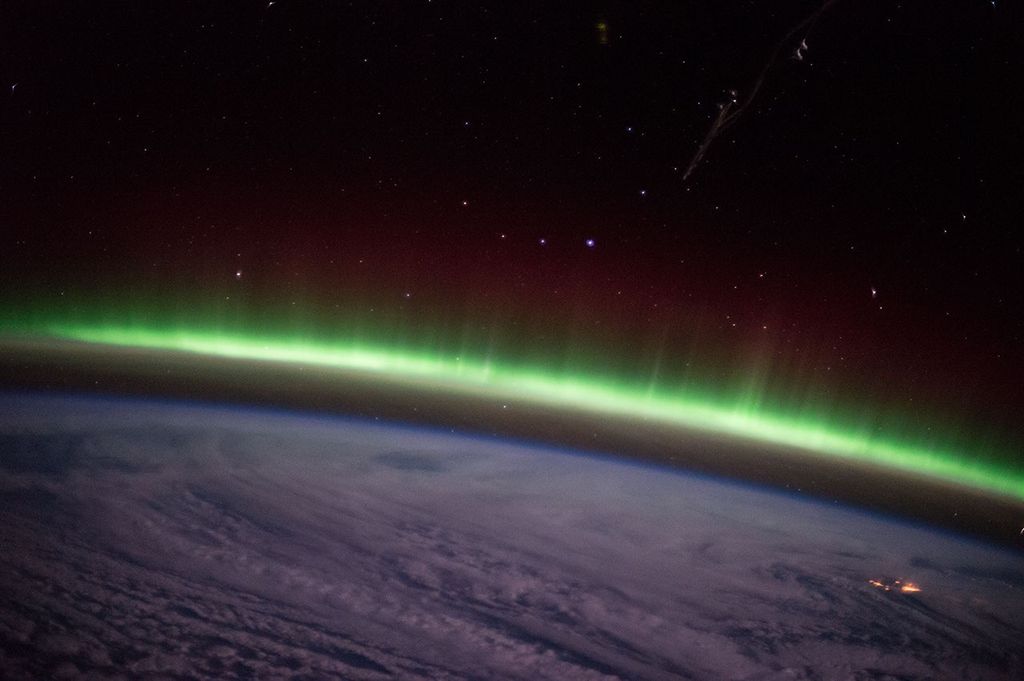
    A green auroral arc appears above the clouds in this photo taken by an astronaut aboard the International Space Station in 2014. (Credit: Nasa)
    Share
    Facebook Twitter LinkedIn Pinterest Email Copy Link

    Scientists at Nasa say they may have identified the physical process that powers auroral arcs, a distinctive type of aurora, after analysing archived observations from multiple space- and ground-based instruments.

    Auroras form when charged particles from space collide with Earth’s upper atmosphere, producing colourful light displays near the poles. Auroral arcs are a specific variety, appearing from the ground as curtain-like bands of light and from orbit as thin, glowing lines cutting across the atmosphere.

    See also: NASA Study Challenges Role of Meteorites in Delivering Earth’s Water

    While researchers have long understood that auroral arcs are generated when high-energy electrons strike atmospheric atoms, the source of the electric fields accelerating those particles has remained unclear. A new analysis suggests those fields are driven by Alfvén waves, a type of space wave that travels along Earth’s magnetic field lines.

    The findings are based on a rare, simultaneous observation of an auroral arc recorded in April 2015 by Nasa’s Van Allen Probes, the U.S. military’s Defense Meteorological Satellite Program F19 spacecraft, and ground-based cameras from Nasa’s THEMIS mission. The combined datasets allowed researchers to track the same event from different vantage points over an extended period.

    See also: ESA Showcases Artemis II Moon Rocket Rollout in New Time-lapse

    According to the article, the multi-instrument approach helped reveal “the space conditions that helped form the auroral arc,” strengthening evidence that Alfvén waves play a central role in shaping these natural light displays.

    Source: Nasa

    Defense Meteorological Satellite Program F19 Spacecraft NASA Nasa THEMIS Mission U.S. military
    Follow on Google News Follow on Flipboard
    Share. Facebook Twitter Pinterest LinkedIn Tumblr Telegram Email Copy Link
    Previous ArticleFinal Launches DX4000 CL Closed-Back Headphones Targeting Open-Back Sound
    Next Article Final Fantasy 7 Director Outlines Challenges of Developing for Switch 2
    Marco Rossi

    Related Posts

    NASA Names Four Astronauts for Artemis III Test Mission Ahead of Planned Moon Landing

    June 10, 2026

    Offshore Launch Showcases China’s Expanding Commercial Space Program

    February 17, 2026

    Webb Observations Expand Understanding of Dark Matter Structure

    February 3, 2026
    Add A Comment
    Leave A Reply Cancel Reply

    Latest Post

    Meta and Zelestra Expand Solar Partnership With 180MW Texas Power Agreement

    June 10, 2026

    NASA Names Four Astronauts for Artemis III Test Mission Ahead of Planned Moon Landing

    June 10, 2026

    Rivian Delivers First R2 SUVs as Automaker Targets Mass-Market Growth

    June 10, 2026

    Waymo Acquires Former Apple Self-Driving Test Facility in Arizona for $220 Million

    June 10, 2026

    Lucid Misses Q1 Delivery Expectations Amid Supplier Disruption and Recall

    April 4, 2026
    About

    Teknowire is a dedicated technology news portal that delivers the latest insights, trends, and developments shaping the future of innovation. From breakthroughs in consumer electronics and artificial intelligence to emerging startups, software trends, and global tech policy, we bring our readers accurate, timely, and accessible coverage of the world’s most dynamic industry.

    Founded with a mission to simplify complex technology for a broader audience, Teknowire serves professionals, enthusiasts, entrepreneurs, and everyday users who want to stay informed about how technology is transforming business, society, and daily life. We prioritize clarity, depth, and reliability in every story — whether it’s a breaking headline, a product launch, or an in-depth feature.

    Latest Posts

    Meta and Zelestra Expand Solar Partnership With 180MW Texas Power Agreement

    June 10, 2026

    NASA Names Four Astronauts for Artemis III Test Mission Ahead of Planned Moon Landing

    June 10, 2026

    Rivian Delivers First R2 SUVs as Automaker Targets Mass-Market Growth

    June 10, 2026
    Subscribe

    Subscribe to Updates

    Get the latest tech news from Teknowire.

    Facebook X (Twitter) Instagram Pinterest Threads
    • Home
    • About Us
    • Advertising
    • Privacy Policy
    • Cookie Policy
    • Artificial Intelligence (AI) Policy
    • Contact
    © 2026 Teknowire. Designed by Teknowire.

    Type above and press Enter to search. Press Esc to cancel.

    Go to mobile version