
Astronomers have reported that several celestial objects appear to endure the extreme environment surrounding the Milky Way’s supermassive black hole, challenging long-held assumptions about the region’s destructive nature. The black hole, estimated at around four million times the mass of the Sun, has traditionally been viewed as powerful enough to rip apart stars, gas clouds and planets.
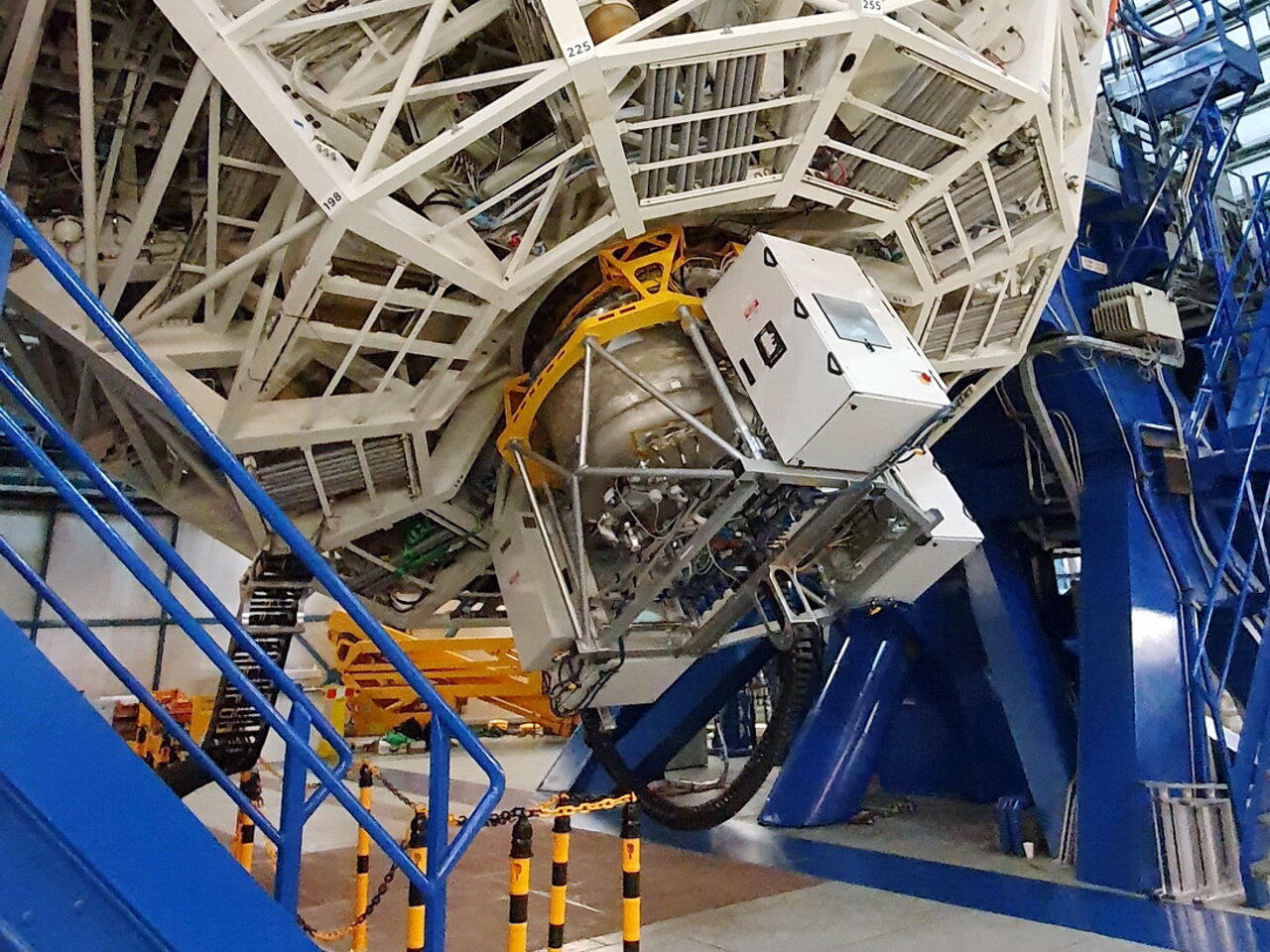
Using the ERIS instrument on the Very Large Telescope in Chile, researchers observed behaviour that contradicts earlier studies predicting the destruction of certain nearby objects. One of the most notable is G2, a cloud of gas and dust once expected to be consumed. Instead, “astronomers saw that this structure had simply passed through the black hole, avoiding the event horizon, without undergoing any changes,” according to the original report.
See also: Webb Telescope Captures Dwarf Galaxies Linked by Ancient Gas Bridge
Dr. Florian Peißker, who has analysed G2, suggested that a star may be hidden within the cloud, helping it maintain a stable orbit as it moves through the region. This hypothesis could explain why the object resisted tidal forces that were expected to tear it apart.
Other structures near the galactic centre have also surprised researchers. The binary star system D9 has not merged despite its proximity, while X7 continues its northward movement and X3 has accelerated by about 100 km/s, indicating dynamic yet stable conditions.
See also: Scientists Reveal Martian Clocks Run Faster Than Earth Clocks
The findings suggest that the environment around the supermassive black hole is far calmer than previously assumed. Scientists say the observations may prompt a reassessment of how matter behaves in regions dominated by extreme gravitational forces.
Source: Astronomy & Astrophysics