
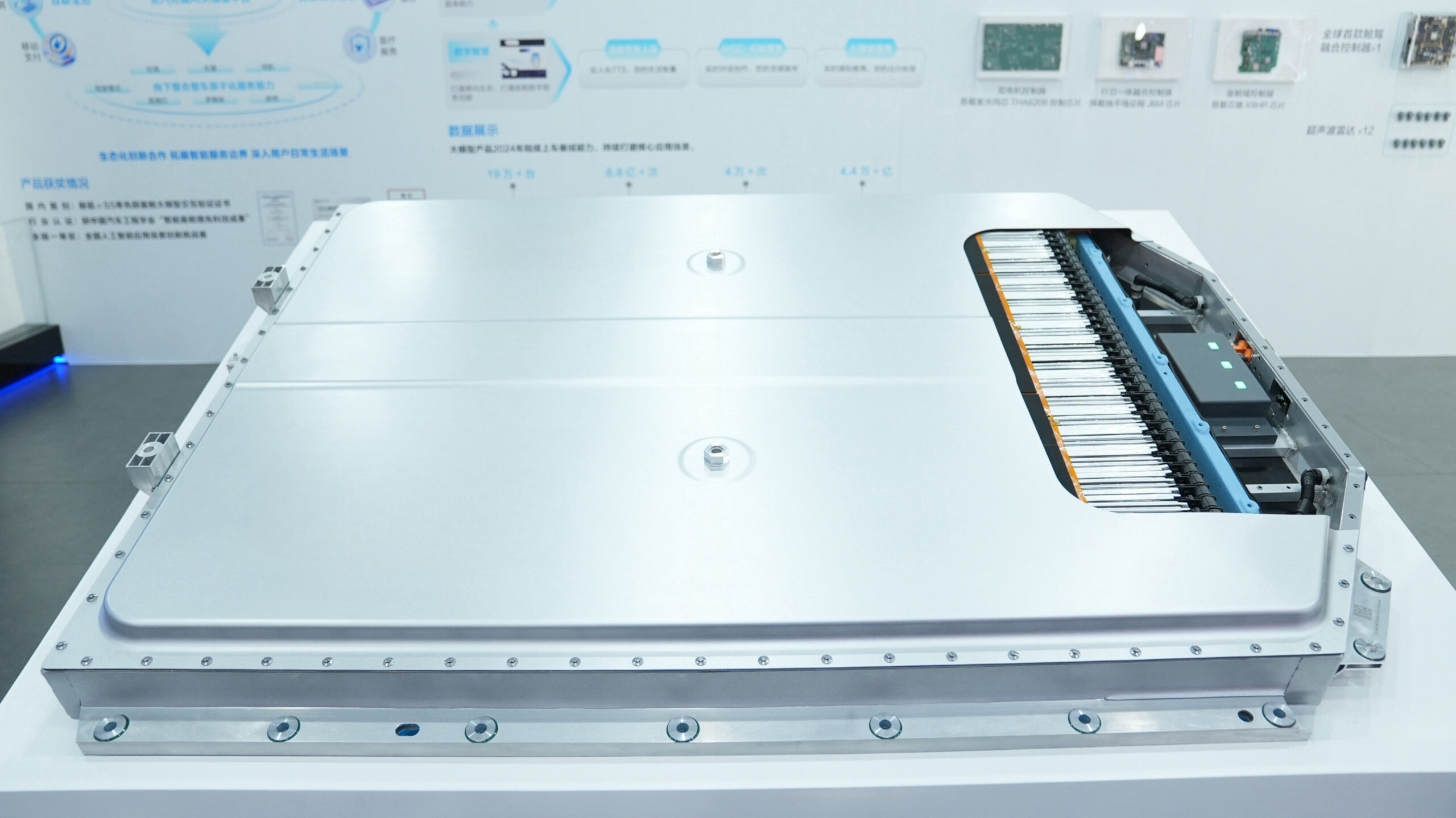
A major developer of solid-state batteries has reported a new energy density milestone that could eventually enable electric vehicles to travel more than 1,000 miles on a single charge, though the technology is expected to be deployed first in robots rather than passenger cars.
The company said it has achieved an energy density of 824 watt-hours per kilogram, surpassing recent advances by rivals and moving closer to levels that could dramatically extend driving range. The announcement comes as automakers and battery makers race to commercialize solid-state batteries, which replace liquid electrolytes with solid materials to improve safety and performance.
See also: Dongfeng Solid-State Battery Clears Tests Ahead of 2026 Production
Chinese battery firm WeLion said its longer-term target is to reach 1,000 Wh/kg using a new solid-state electrolyte chemistry developed with chemical group BASF. The company already supplies semi-solid battery packs to NIO, including a 150 kWh pack installed in the ET7 sedan that delivers a range of more than 600 miles, one of the longest currently available in a production electric vehicle.
Despite the technical progress, WeLion cautioned that such ultra-high energy density batteries remain expensive and are not yet suitable for mass-market electric cars. “When this kind of battery reaches production, it will still be very costly,” the company’s chairman said, noting that current high-capacity packs can cost as much as an entire vehicle.
See also: China’s GAC Group Completes First Production Line for Large-Capacity Solid-State EV Batteries
As a result, WeLion and other industry players see early applications in areas where energy density and safety outweigh cost concerns, such as humanoid robots and drones. This view aligns with assessments from battery makers including CATL and Panasonic, which have said that advanced solid-state batteries are more likely to appear first in robots or premium devices before being adopted widely in electric vehicles.
Source: CNC