
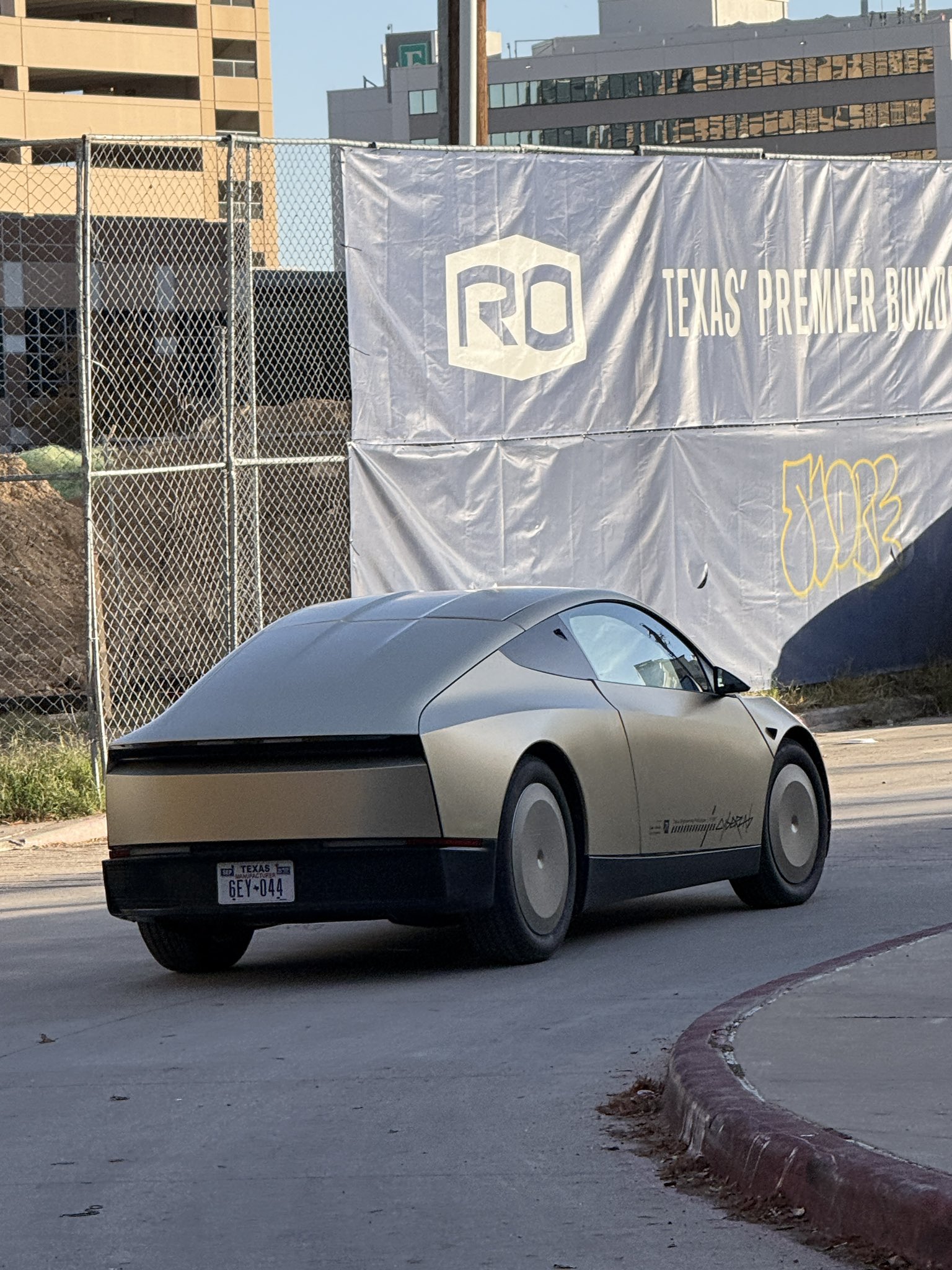
Tesla has begun testing its fully autonomous Cybercab on public streets for the first time, as the electric vehicle maker prepares for a broader expansion of its Robotaxi platform. The two-seat vehicle, which has no pedals or steering wheel, was spotted operating in downtown Austin, Texas, where Tesla earlier launched a limited driverless ride-hailing service.
The Austin service currently uses modified Model Y vehicles running a custom version of Full Self-Driving software known as FSD 14 (Unsupervised). Tesla chose the Model Y for the initial rollout after securing permits to operate that vehicle, allowing the company to map routes and test its ride-share and payment systems in real-world conditions.
Tesla Chief Executive Elon Musk has said the company plans to add both owner vehicles and the purpose-built Cybercab to its Robotaxi platform in 2026. “According to Elon Musk, however, Tesla has plans to add owner vehicles, most likely 2026 Model Y units again, as well as the Cybercab, to its Robotaxi platform in 2026,” the article said, adding that older vehicles with HW3 hardware will not be eligible for unsupervised operation.
The Cybercab has been tested for months on Tesla’s factory premises, and the company has also equipped standard Model 3 vehicles with Cybercab-specific self-driving systems to assess performance beyond controlled environments. The public road test suggests Tesla believes the vehicle is ready for more complex traffic conditions.
See also: Tesla’s Two-seat Cybercab Design Gains Support as Waymo Ride Data Shows Low Occupancy Rates
It remains unclear whether a human supervisor was inside the Cybercab during its first public outing. With no pedals or steering wheel available for manual control, regulators are expected to closely watch how the vehicle performs and how Tesla addresses safety and oversight as it advances its driverless ambitions.