
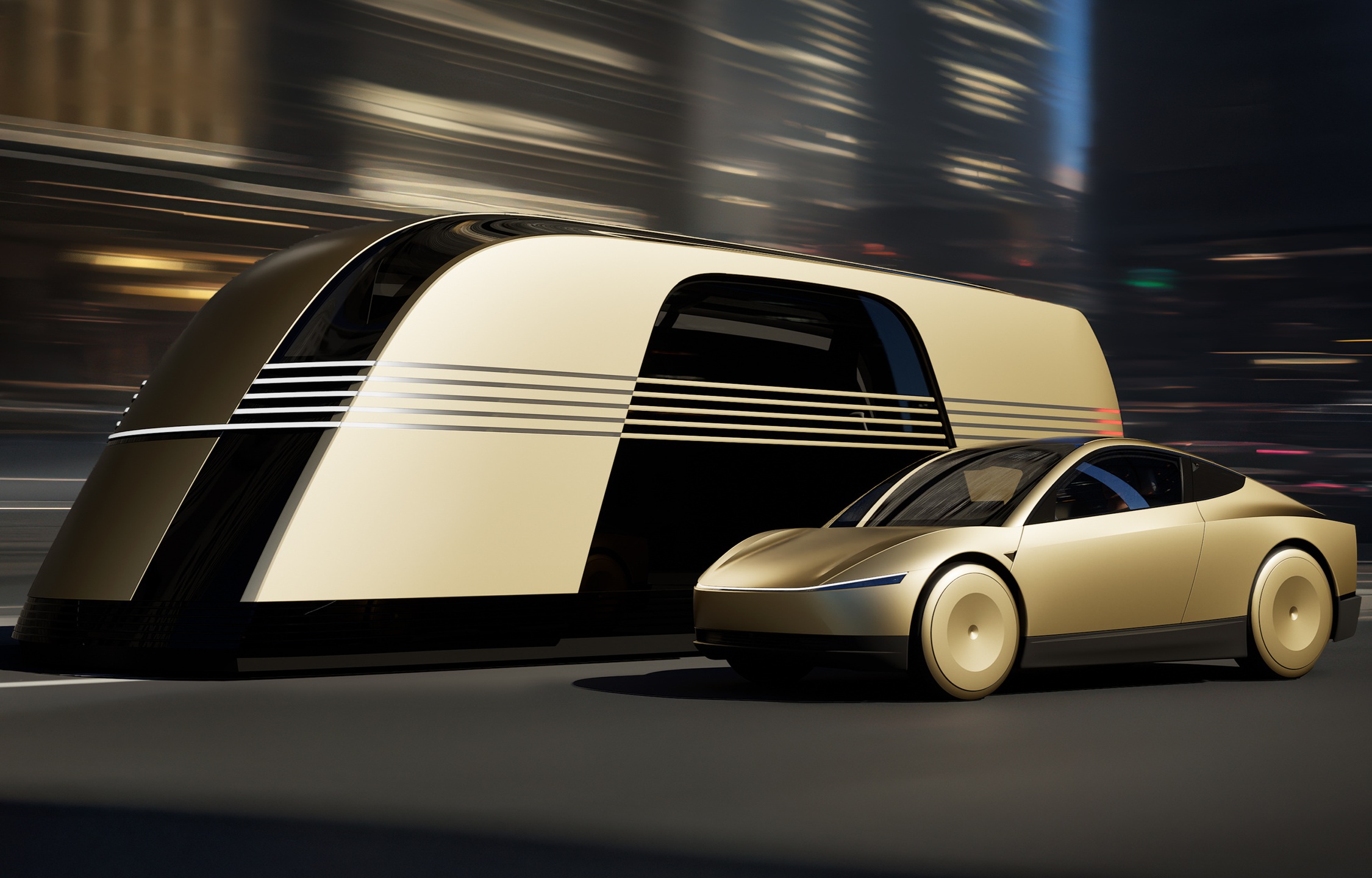
Tesla’s design approach for its upcoming Cybercab has drawn renewed attention following new Waymo robotaxi occupancy statistics, which show most autonomous ride-hailing trips involve only one or two passengers. The Cybercab, a steering-wheel-free, two-seat autonomous vehicle equipped with wireless charging, is scheduled to enter service as part of Tesla’s Robotaxi platform in 2026. A line in the original report highlighted the motivation behind the vehicle’s layout, noting the company aims to “leave out everything that can be spared so that the Cybercab is as cheap to manufacture as possible.”
Tesla launched initial Robotaxi tests using standard Model Y units rather than the Cybercab, limiting their deployment to georestricted routes to validate payments and summoning functions. The dedicated Cybercab was showcased last year at a high-profile unveiling event, where Tesla outlined a minimalist configuration featuring no pedals or steering wheel, a compact 40 kWh battery, and wireless charging instead of a traditional NACS port. The vehicle is intended to use off-the-shelf Model Y components while reducing features to lower assembly complexity.
The company has said the Cybercab is designed to be inexpensive to operate, with CEO Elon Musk estimating costs at 25 to 30 cents per mile once mass production begins and economies of scale are achieved. Musk has suggested the model will retail for under $30,000, while some industry analysts believe production costs could fall to approximately $15,000.
Waymo’s latest ride statistics appear to support Tesla’s decision to prioritize a two-seat configuration. According to the figures, 90% of robotaxi journeys carry one or two passengers, and most involve a single traveller. Only 9% of trips include a rider in one of the vehicle’s front seats. The data suggests that additional seating capacity in autonomous vehicles may go largely unused, increasing manufacturing costs without practical benefit.
See also: Tesla Plans Wheelchair-Accessible Robotaxi to Expand Service Inclusivity
The Cybercab has already been observed undergoing real-world validation, and Tesla plans to integrate the model into its Robotaxi fleet in 2026. The company continues to compete with Waymo in the expanding autonomous ride-hailing sector, though both currently rely on five-seat SUVs rather than purpose-built, size-optimized vehicles.