
Close Menu
    Facebook X (Twitter) Instagram Threads
    Teknowire
    • Home
    • News
      • Business
        • Tech Startups
        • Corporate Strategies
        • Market Trends
        • Investments
      • Breaking Tech News
      • Policy
      • Industry Announcements
      • Mergers & Acquisitions
    • AI
      • AI Innovations
      • Ethics & Regulations
      • ML & Automation
      • Robotics & Drones
    • Internet
      • Social Media
      • Digital Marketing
      • Web Development
      • Streaming
    • Device
      • Accessories
      • Laptops
      • PC
      • Smartphone
      • Smartwatch
      • Tablet
    • Game
      • Esports
      • Game Reviews
      • Mobile Gaming
      • PC & Console Gaming
    • Apps
      • Cybersecurity
      • Mobile Apps
      • Operating Systems
      • Productivity Tools
      • Web & Cloud Services
    • Transportation
      • Electric Vehicle
      • Autonomous & Connected Vehicles
      • Battery & Charging
      • E-Bikes & E-Scooters
    • Science
      • Biotechnology
      • Quantum Computing
      • Space Exploration
      • Sustainable Tech
    • Others
      • Guide
      • How To
    Donation
    Trending Topics:
    • AI Innovations
    • Investments
    • Tech Startups
    • Smartphone
    • Social Media
    • Policy
    • Space Exploration
    • Cybersecurity
    Teknowire
    Home » Science » Space Exploration » SpaceX Schedules July 17 Starship Flight 13 to Advance Reusable Launch System
    Space Exploration

    SpaceX Schedules July 17 Starship Flight 13 to Advance Reusable Launch System

    The mission will validate key hardware upgrades while expanding testing of next-generation Starlink technology.
    By Jordan RobsonJuly 14, 2026No Comments3 Mins Read
    Share Facebook Twitter Pinterest WhatsApp Email LinkedIn Copy Link Reddit Telegram Threads
    Prefer on Google
    Google News
    Credit: SpaceX
    Share
    Facebook Twitter LinkedIn Pinterest Email Copy Link

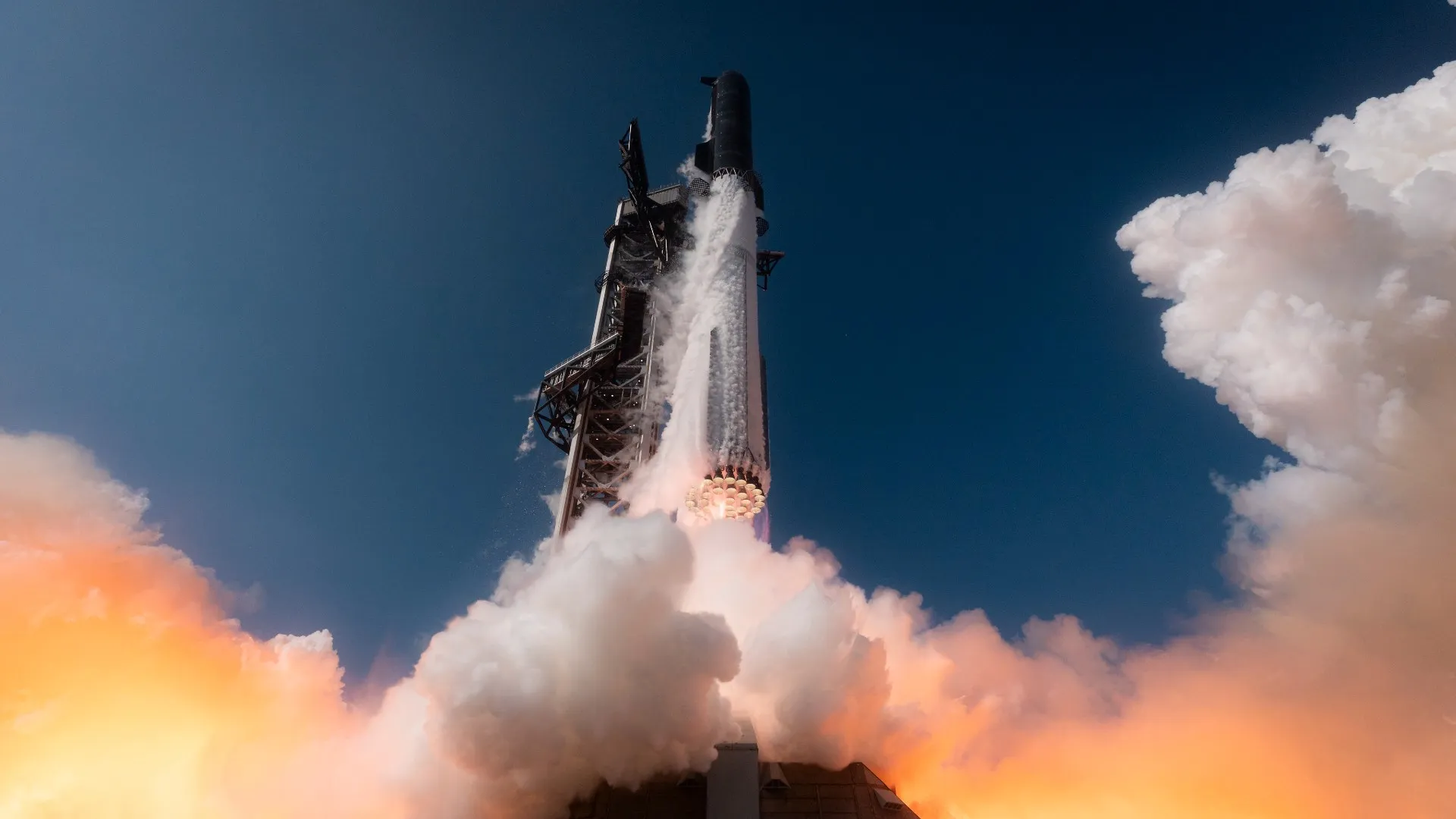
    SpaceX is targeting July 17 for the 13th flight test of its Starship launch system, as the company continues to advance development of its fully reusable rocket with a mission focused on vehicle reliability and next-generation satellite deployment.

    The launch window is scheduled to open at 6:45 a.m. Jakarta time (5:45 p.m. CT on July 16) and will remain available for 90 minutes. A live webcast is expected to begin about 30 minutes before liftoff.

    Booster and Upper Stage Receive Key Upgrades

    Flight 13 will follow a mission profile similar to the previous Starship test, including launch, stage separation, a return flight for the Super Heavy booster and a controlled splashdown of the Starship upper stage.

    Both stages have received hardware and software upgrades following issues encountered during the previous mission.

    For the Super Heavy booster, SpaceX has modified the engine startup sequence after differences in Raptor engine ignition timing caused the vehicle’s flip maneuver to deviate during the last flight. Engineers have also introduced hardware improvements to increase engine relight reliability and updated engine alarm and abort logic after five Raptor engines failed to restart during the previous boostback burn.

    The Starship upper stage has also undergone propulsion system improvements after one of its vacuum-optimized Raptor engines shut down during the previous mission.

    “Several hardware and operational modifications have been made to address the interconnected causes with additional reliability improvements planned in upcoming versions of the Raptor engine,” SpaceX said.

    First Starlink Version 3 Deployment

    The mission will also mark the first deployment of Starlink Version 3 satellites aboard Starship.

    Twenty satellites are scheduled for release during the flight before deploying their solar arrays and communications antennas and attempting to establish laser links with the existing Starlink network.

    The satellites will remain on the same suborbital trajectory as Starship and are expected to burn up during atmospheric reentry about 20 minutes after deployment.

    Six satellites have been fitted with cameras to capture images of Starship’s heat shield during reentry, providing engineers with additional data as the company works toward future return-to-launch-site operations.

    Continued Testing of Thermal Protection

    SpaceX is also using Flight 13 to evaluate several new heat shield technologies.

    The company has installed modified thermal protection tiles, new attachment methods and load-sensing tiles designed to measure structural performance under higher aerodynamic loads.

    Several tiles have also been painted white to simulate missing heat shield tiles, providing visual reference points for onboard imaging systems during atmospheric reentry.

    The July 17 mission represents another milestone in SpaceX’s effort to mature Starship as a fully reusable launch vehicle capable of supporting commercial satellite missions, lunar exploration and future journeys to Mars.

    Source: SpaceMagz

    Aerospace Engineering Heat Shield Technology Launch Vehicles Low-Earth Orbit North America Raptor Reusable Rockets Rocket Engines Satellite Deployment Space Industry Space Transportation SpaceX Starlink Starlink Version 3 Starship Super Heavy United States
    Add as a preferred source on Google
    Share. Facebook Twitter Pinterest LinkedIn Tumblr Telegram Email Copy Link
    Previous ArticleBYD Reveals Redesigned Seagull EV in Chinese Regulatory Filing
    Next Article Microsoft CEO Raises Concerns Over Enterprise Data Control in AI Adoption
    Jordan Robson

    Studied in engineering and journalism. Jordan been covering the startup and hardware scene since 2017.

    Related Posts

    Nous Research Nears $75 Million Funding Round at $1.5 Billion Valuation

    July 14, 2026

    Microsoft CEO Raises Concerns Over Enterprise Data Control in AI Adoption

    July 14, 2026

    SK Hynix Plans U.S. ADR Offering as AI Memory Demand Drives Growth

    July 7, 2026
    Add A Comment
    Leave A Reply Cancel Reply

    Latest Post

    PixVerse Raises $439 Million, Tops $2 Billion Valuation in Series C Extension

    July 14, 2026

    Anthropic Introduces Rupee Pricing for Claude in India

    July 14, 2026

    Nous Research Nears $75 Million Funding Round at $1.5 Billion Valuation

    July 14, 2026

    Microsoft CEO Raises Concerns Over Enterprise Data Control in AI Adoption

    July 14, 2026

    SpaceX Schedules July 17 Starship Flight 13 to Advance Reusable Launch System

    July 14, 2026
    About

    Teknowire is a dedicated technology news portal that delivers the latest insights, trends, and developments shaping the future of innovation. From breakthroughs in consumer electronics and artificial intelligence to emerging startups, software trends, and global tech policy, we bring our readers accurate, timely, and accessible coverage of the world’s most dynamic industry.

    Founded with a mission to simplify complex technology for a broader audience, Teknowire serves professionals, enthusiasts, entrepreneurs, and everyday users who want to stay informed about how technology is transforming business, society, and daily life. We prioritize clarity, depth, and reliability in every story — whether it’s a breaking headline, a product launch, or an in-depth feature.

    Subscribe to Updates

    Get the latest tech news from Teknowire.

    Policies
    • Ownership & Funding
    • Editorial Policy
    • Privacy Policy
    • Actionable Feedback Policy
    • Artificial Intelligence (AI) Policy
    • Cookie Policy
    • Corrections Policy
    • Diversity Policy
    • Ethics Policy
    Facebook X (Twitter) Instagram Pinterest Threads
    • Home
    • About Us
    • Advertising
    • Privacy Policy
    • Cookie Policy
    • Artificial Intelligence (AI) Policy
    • Donation
    • Contact
    © 2026 Teknowire. Designed by Teknowire.

    Type above and press Enter to search. Press Esc to cancel.

    Go to mobile version