
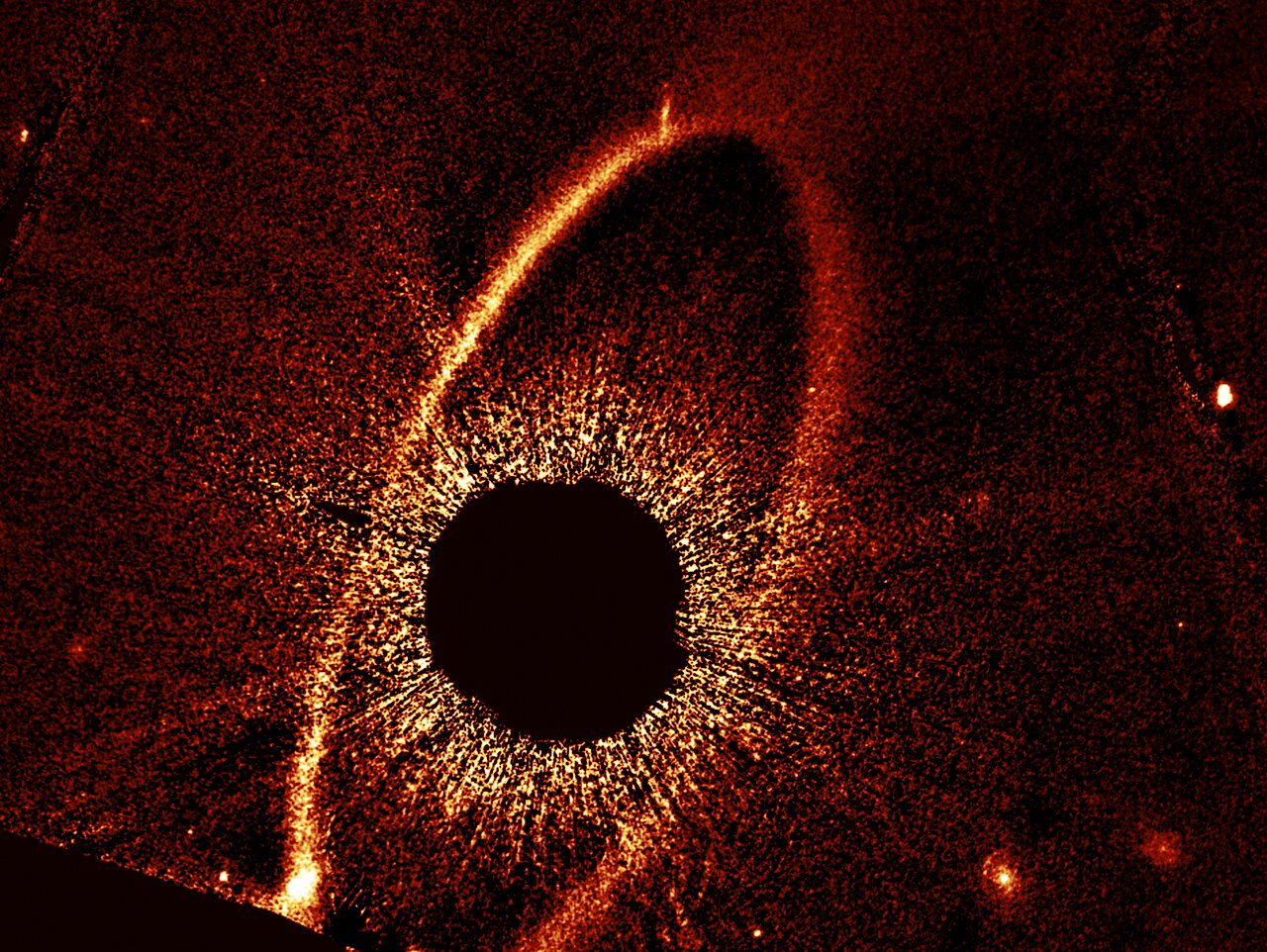
Astronomers have observed catastrophic collisions between large bodies in a nearby planetary system for the first time, using the NASA/ESA Hubble Space Telescope to identify expanding debris clouds around the bright star Fomalhaut, according to the European Space Agency.
The observations revealed two separate points of light near the star, located about 25 light-years from Earth, which scientists interpret as debris produced by violent impacts between massive planetesimals. Researchers say the Fomalhaut system appears to be undergoing a period of dynamical instability similar to the early evolution of the solar system, when collisions were more frequent.
See also: Hubble Captures Rare Wolf-Rayet Stars in Bright Dwarf Galaxy Markarian 178
One of the debris clouds was initially detected in 2008 and at the time was considered a candidate planet, making Fomalhaut the first system with a possible planet observed in visible light. Further analysis has since shown that the object is more consistent with a cloud of dust created by colliding bodies. More recent Hubble observations uncovered a second nearby debris cloud, an unexpected finding given that such events were previously thought to occur only once every tens of thousands of years.
Scientists say the close proximity of the two debris clouds challenges existing theories that such collisions should be randomly distributed within debris disks. The observations provide a rare opportunity to estimate the size and number of planetesimals in the system, which are believed to be tens of kilometres across and far more numerous than previously inferred.
See also: Webb Telescope Captures Dwarf Galaxies Linked by Ancient Gas Bridge
The findings also highlight challenges for future missions designed to directly image exoplanets, as transient dust clouds can resemble planets reflecting starlight. Astronomers plan to continue monitoring the system with Hubble and the James Webb Space Telescope to study how the debris evolves and to better understand the processes shaping young planetary systems.
Source: ESA