
Close Menu
    Facebook X (Twitter) Instagram Threads
    Teknowire
    • Home
    • News
      • Business
        • Tech Startups
        • Corporate Strategies
        • Market Trends
        • Investments
      • Breaking Tech News
      • Policy
      • Industry Announcements
      • Mergers & Acquisitions
    • AI
      • AI Innovations
      • Ethics & Regulations
      • ML & Automation
      • Robotics & Drones
    • Internet
      • Social Media
      • Digital Marketing
      • Web Development
      • Streaming
    • Device
      • Accessories
      • Laptops
      • PC
      • Smartphone
      • Smartwatch
      • Tablet
    • Game
      • Esports
      • Game Reviews
      • Mobile Gaming
      • PC & Console Gaming
    • Apps
      • Cybersecurity
      • Mobile Apps
      • Operating Systems
      • Productivity Tools
      • Web & Cloud Services
    • Transportation
      • Electric Vehicle
      • Autonomous & Connected Vehicles
      • Battery & Charging
      • E-Bikes & E-Scooters
    • Science
      • Biotechnology
      • Quantum Computing
      • Space Exploration
      • Sustainable Tech
    • Others
      • Guide
      • How To
    Donation
    Trending Topics:
    • AI Innovations
    • Investments
    • Tech Startups
    • Smartphone
    • Social Media
    • Policy
    • Space Exploration
    • Cybersecurity
    Teknowire
    Home » Science » Space Exploration » Hubble Spots Rare Planetary Collisions around nearby star Fomalhaut
    Space Exploration

    Hubble Spots Rare Planetary Collisions around nearby star Fomalhaut

    Astronomers say debris clouds signal violent upheaval in young planetary system
    By Lalu JazidiDecember 25, 2025No Comments2 Mins Read
    Share Facebook Twitter Pinterest WhatsApp Email LinkedIn Copy Link Reddit Telegram Threads
    Prefer on Google
    Google News
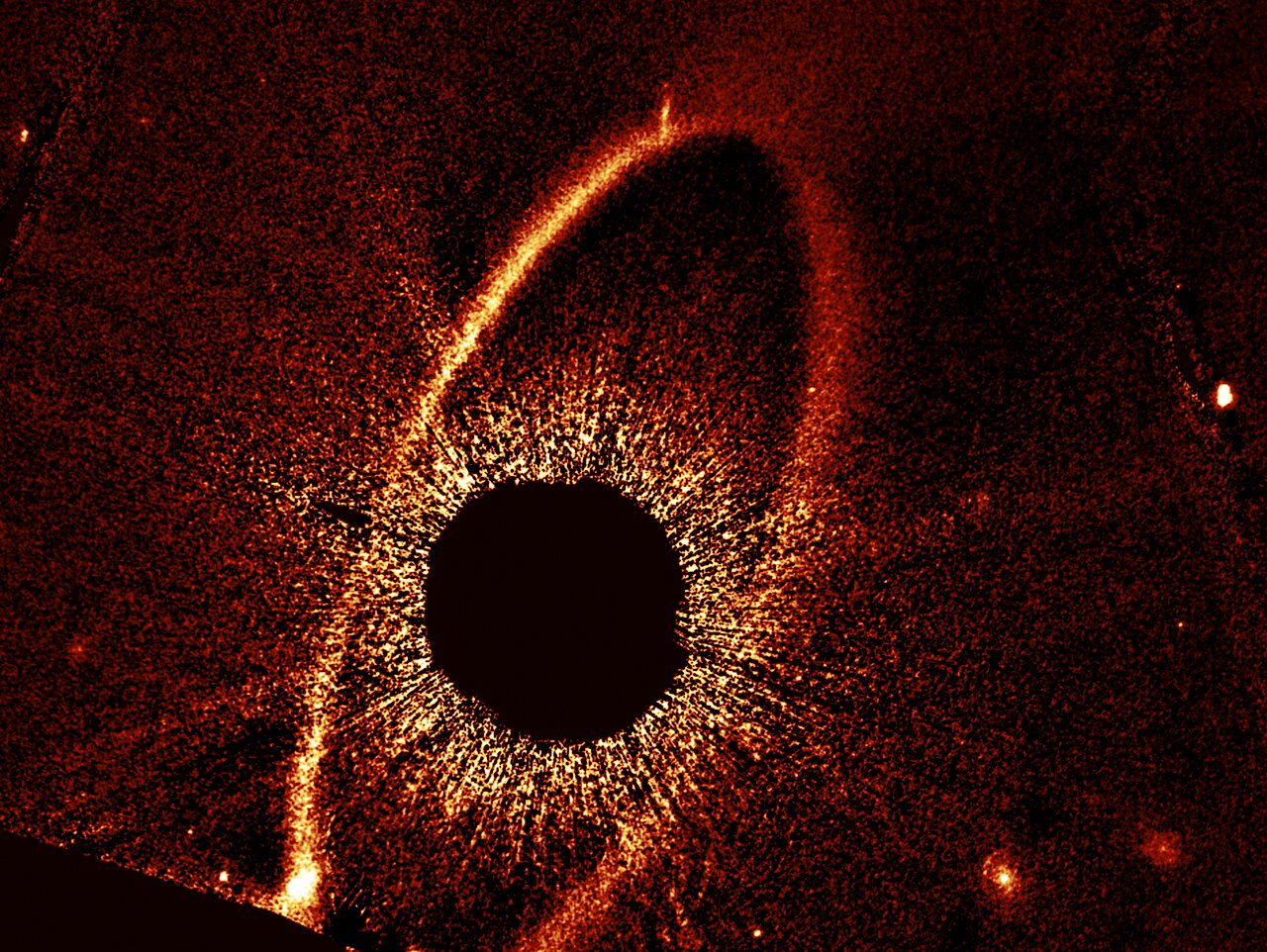
    NASA/ESA Hubble Space Telescope image shows the debris ring and dust clouds cs1 and cs2 around the star Fomalhaut (Credit: NASA, ESA, P. Kalas (UC Berkeley), J. DePasquale (STScI))
    Share
    Facebook Twitter LinkedIn Pinterest Email Copy Link

    Astronomers have observed catastrophic collisions between large bodies in a nearby planetary system for the first time, using the NASA/ESA Hubble Space Telescope to identify expanding debris clouds around the bright star Fomalhaut, according to the European Space Agency.

    The observations revealed two separate points of light near the star, located about 25 light-years from Earth, which scientists interpret as debris produced by violent impacts between massive planetesimals. Researchers say the Fomalhaut system appears to be undergoing a period of dynamical instability similar to the early evolution of the solar system, when collisions were more frequent.

    See also: Hubble Captures Rare Wolf-Rayet Stars in Bright Dwarf Galaxy Markarian 178

    One of the debris clouds was initially detected in 2008 and at the time was considered a candidate planet, making Fomalhaut the first system with a possible planet observed in visible light. Further analysis has since shown that the object is more consistent with a cloud of dust created by colliding bodies. More recent Hubble observations uncovered a second nearby debris cloud, an unexpected finding given that such events were previously thought to occur only once every tens of thousands of years.

    Scientists say the close proximity of the two debris clouds challenges existing theories that such collisions should be randomly distributed within debris disks. The observations provide a rare opportunity to estimate the size and number of planetesimals in the system, which are believed to be tens of kilometres across and far more numerous than previously inferred.

    See also: Webb Telescope Captures Dwarf Galaxies Linked by Ancient Gas Bridge

    The findings also highlight challenges for future missions designed to directly image exoplanets, as transient dust clouds can resemble planets reflecting starlight. Astronomers plan to continue monitoring the system with Hubble and the James Webb Space Telescope to study how the debris evolves and to better understand the processes shaping young planetary systems.

    Source: ESA

    ESA Hubble Space Telescope Hubble Telescope James Webb Space Telescope NASA
    Add as a preferred source on Google
    Share. Facebook Twitter Pinterest LinkedIn Tumblr Telegram Email Copy Link
    Previous ArticleMicrosoft Clarifies Xbox Profit Strategy After Media Report
    Next Article Samsung Unveils 6K Glasses-free 3D Gaming Monitor Ahead of CES 2026
    Lalu Jazidi

    Studied in political science. Lalu been covering the startup and e-business scene since 2017.

    Related Posts

    Reditus Space Completes ENOS Spacecraft Ahead of First Orbital Reentry Mission

    July 14, 2026

    SpaceX Schedules July 17 Starship Flight 13 to Advance Reusable Launch System

    July 14, 2026

    Blue Origin Targets New Glenn Return to Flight as Explosion Investigation Continues

    July 1, 2026
    Add A Comment
    Leave A Reply Cancel Reply

    Follow Us!
    • Facebook
    • Twitter
    • Pinterest
    • LinkedIn
    • Telegram
    • WhatsApp
    Latest Post

    Rime Raises $24 Million to Advance Enterprise Voice AI Models

    July 16, 2026

    DeepSeek Reportedly Seeks $1.5 Billion Funding at $71 Billion Valuation

    July 16, 2026

    Senra Systems Raises $65 Million to Scale Wire Harness Manufacturing

    July 16, 2026

    Spotify Expands Parent-Managed Accounts to Free Users

    July 16, 2026

    Stripe and Advent Offer More Than $53 Billion to Acquire PayPal

    July 16, 2026
    About

    Teknowire is a dedicated technology news portal that delivers the latest insights, trends, and developments shaping the future of innovation. From breakthroughs in consumer electronics and artificial intelligence to emerging startups, software trends, and global tech policy, we bring our readers accurate, timely, and accessible coverage of the world’s most dynamic industry.

    Founded with a mission to simplify complex technology for a broader audience, Teknowire serves professionals, enthusiasts, entrepreneurs, and everyday users who want to stay informed about how technology is transforming business, society, and daily life. We prioritize clarity, depth, and reliability in every story — whether it’s a breaking headline, a product launch, or an in-depth feature.

    Subscribe to Updates

    Get the latest tech news from Teknowire.

    Policies
    • Ownership & Funding
    • Editorial Policy
    • Privacy Policy
    • Actionable Feedback Policy
    • Artificial Intelligence (AI) Policy
    • Cookie Policy
    • Corrections Policy
    • Diversity Policy
    • Ethics Policy
    Facebook X (Twitter) Pinterest LinkedIn WhatsApp Telegram
    • Home
    • About Us
    • Advertising
    • Privacy Policy
    • Cookie Policy
    • Artificial Intelligence (AI) Policy
    • Donation
    • Contact
    © 2026 Teknowire. Designed by Teknowire.

    Type above and press Enter to search. Press Esc to cancel.