
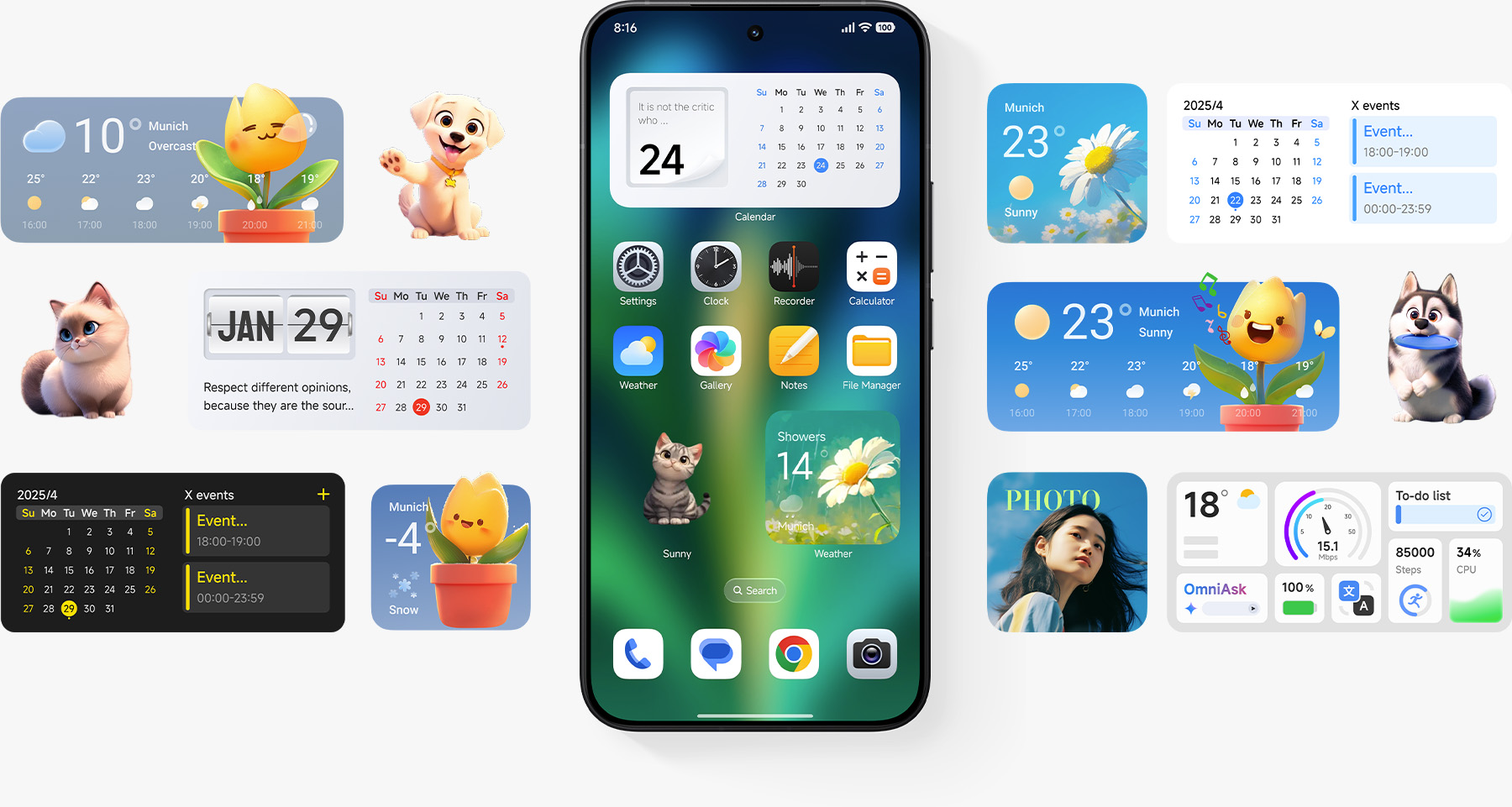
Xiaomi has begun the global rollout of HyperOS 3, its latest mobile operating system, following its initial unveiling in China last month. The company has also opened a beta program to allow users to test new features before the stable release, putting it in line with software practices at Apple, Google and Samsung.
Despite its broad availability, not all devices running HyperOS 3 will include the full set of new features. Early reports suggest that Xiaomi’s Hyper Island function — a system interface element similar to Apple’s Dynamic Island — may be absent on some mid-range and budget devices such as the Redmi Note series.
Redmi Note series and below won't feature the hyperisland in HyperOS 3.
After reading the issue on HyperCeiler's repo, I downgraded to the same level that Note 15 Pro+ uses and it's literally just the same as OS2. 😭 pic.twitter.com/ZZ2hJpY18o
— PaperKing13 (@paperking13) September 27, 2025
“Seemingly, not all versions of HyperOS 3 are created equal,” a contributor wrote in a post on X, noting that even models like the Redmi Note 14 Pro Plus may not officially support Hyper Island.
Xiaomi has outlined release schedules for both Chinese and global users, covering dozens of devices including new flagships like the Xiaomi 15T and Xiaomi 15T Pro. According to the company’s roadmap, the Redmi Note 14 series is expected to receive HyperOS 3 in the first global rollout batch next month, while the older Redmi Note 13 line may have to wait until early 2026.
The decision to restrict some features to higher-end models has not yet been confirmed by Xiaomi, leaving open questions about how consistent the user experience will be across different segments of its product lineup.