
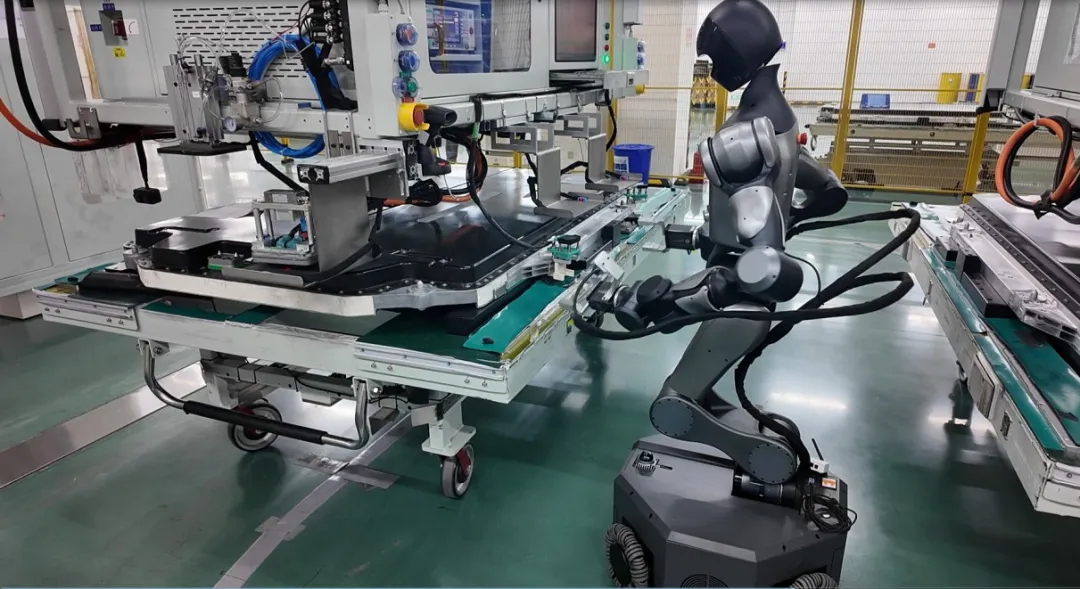
Automakers’ plans to introduce humanoid robots on factory floors are facing economic constraints, as current production costs remain far higher than those of human labour. Analysts say that while companies promote rapid advances in robotics, pricing and durability continue to limit large-scale adoption.
Tesla has said its Optimus humanoid robot could eventually be priced at around $20,000 to $30,000 if manufactured in the tens of millions, a level of scale that has yet to be achieved in the sector. Industry observers note that intensifying competition and technical hurdles may prevent humanoid robots from reaching such volumes in the near term.
See also: CATL Deploys Humanoid Robots on EV Battery Production Lines
At Boston Dynamics, the Atlas humanoid robot is reported to cost about $300,000 per unit to build. Its parent company, Hyundai Motor Group, plans to reduce that figure substantially by redesigning actuators and other components, with a target of lowering per-unit costs to roughly $130,000 by 2030, when tens of thousands of units could be deployed in Hyundai factories.
Despite planned reductions, analysts argue that humanoid robots remain too expensive and limited to replace skilled workers. Technical challenges such as balance stability, joint overheating, restricted autonomy and less precise object handling continue to affect performance, while efforts to lower component costs risk compromising durability.
See also: CLOiD Household Robot Debuts as LG’s Latest CES Concept
Hyundai intends to use Atlas robots only within its own facilities, limiting potential economies of scale. Tesla, meanwhile, is developing Optimus as a general-purpose robot expected to debut around 2027. Competition is also growing from China, where humanoid robots are already being produced in larger numbers at lower cost, intensifying pressure on Western manufacturers to close the gap.
Source: The Elec