
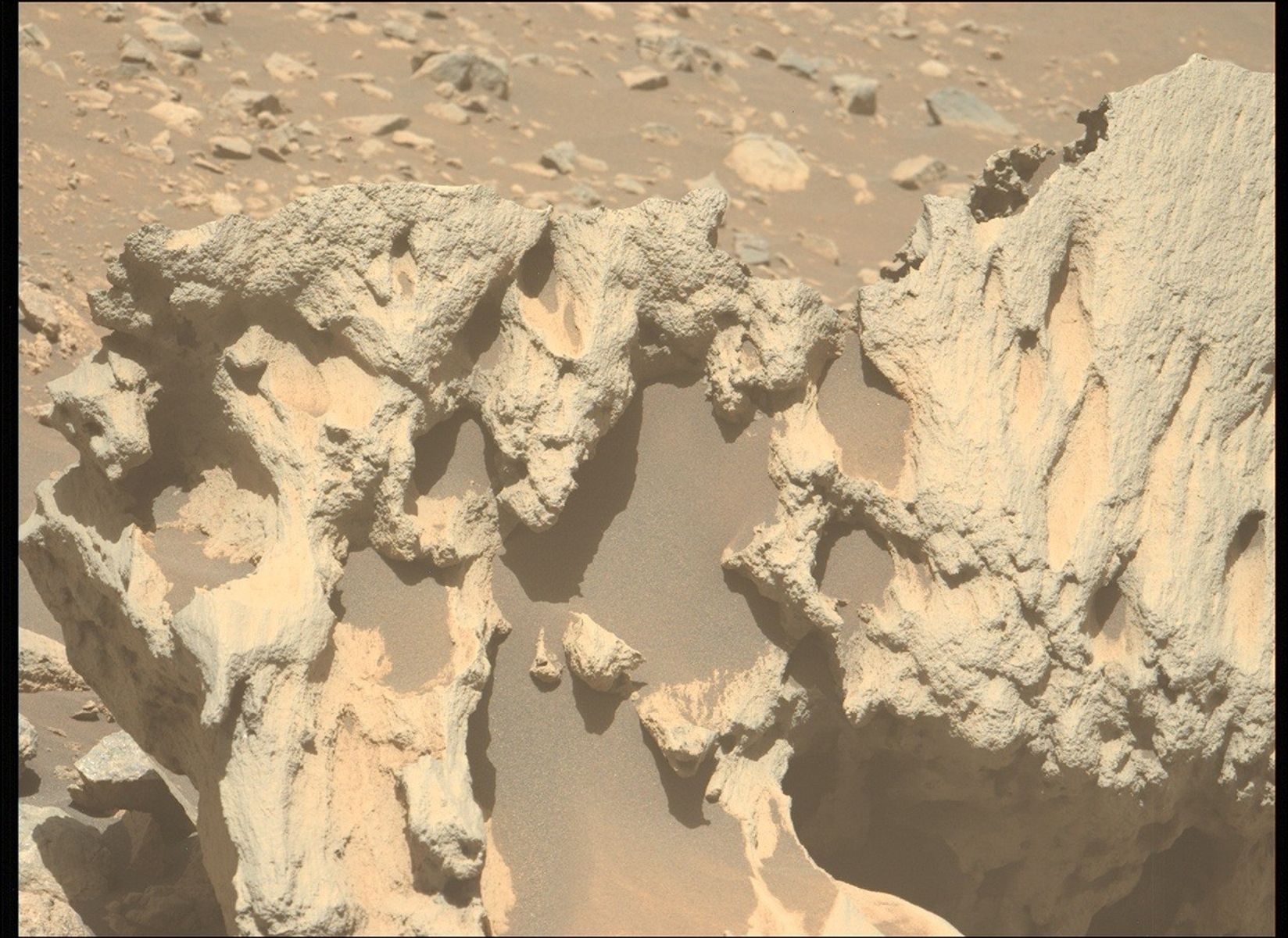
NASA’s Perseverance rover has identified an unusually shaped rock on the edge of Mars’ Jezero crater that scientists suspect may be an iron-nickel meteorite, the agency said. If confirmed, it would be the rover’s first discovery of this type of meteorite since landing in 2021.
The rock, informally named “Phippsaksla,” measures roughly 80 cm across and was found during an investigation of bedrock at a site called Vernodden. NASA said the object stood out sharply against the surrounding flat, fragmented terrain. “Phippsaksla had a high-standing appearance and exhibited a cavernous weathering texture,” the agency noted in its report.
See also: NASA’s ESCAPADE Mission Nears Launch to Study Mars’ Magnetosphere
Iron-nickel meteorites have been found on Mars before by other missions, including NASA’s Curiosity rover in Gale Crater. But Perseverance had not encountered any within Jezero crater until now, despite geological signs suggesting past meteorite falls. “Perseverance has not identified any so far within the Jezero crater, even though the crater’s features suggest that meteorites did fall into it,” NASA said.
Perseverance initially captured images of Phippsaksla with its Left Mastcam-Z camera, one of two zoom-capable cameras mounted on the rover’s mast. The rover then deployed its SuperCam instrument for a more detailed analysis, which detected iron and nickel in the rock’s composition.
See also: Blue Origin Advances Heavy-Lift Program With Successful Launch
NASA said the findings support the hypothesis that the object is likely a meteorite, though further studies will be conducted to confirm its origin.
Source: NASA