
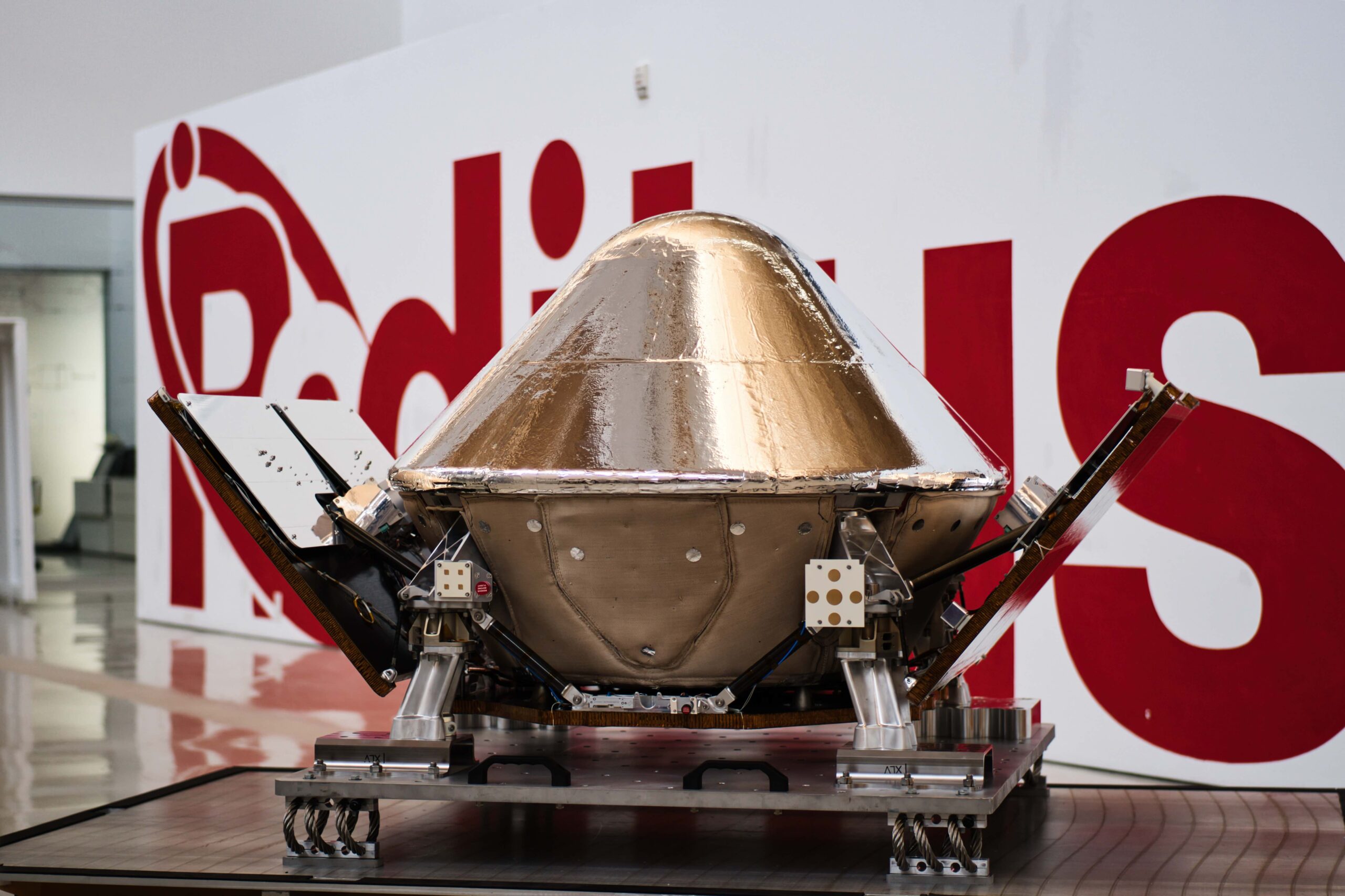
Reditus Space has completed its first ENOS reentry spacecraft and is preparing for an inaugural mission later this year, marking a step toward the company’s goal of providing reusable orbital return services for commercial customers.
The spacecraft is scheduled to launch this fall and remain in orbit for approximately two months before reentering Earth’s atmosphere at speeds approaching Mach 29. Following reentry, ENOS is expected to splash down off the coast of Florida, where it will be recovered.
ENOS Targets Growing Orbital Return Market
Reditus is developing reusable spacecraft to return research payloads and manufactured products from orbit as demand grows for commercial microgravity research and in-space manufacturing.
The company believes reusable Earth-return vehicles will become increasingly important as commercial space stations and free-flying research platforms emerge to succeed the International Space Station.
Chief Executive Officer Stef Crum said Reditus aims to make orbital reentry a routine service.
“In the long term, our intent is to make [reentry] as regular an occurrence as launch.”
“So that, for all intents and purposes, means that there is a system reentering multiple times a day.”
To support frequent missions, the company is developing reusable heat shield technology designed to withstand repeated atmospheric reentries, reducing reliance on single-use thermal protection systems.
Reusable Design to Evolve
The first ENOS spacecraft weighs approximately 200 kilograms and can accommodate payloads of up to 40 kilograms.
For the initial demonstration flight, only selected internal components will be recovered, while external equipment including solar panels, antennas, radiators and sensors will be discarded before reentry.
Reditus plans to increase payload capacity to roughly 60 kilograms in future versions while preserving more spacecraft hardware for refurbishment and repeated use.
Crum said greater reusability is expected to improve operating economics as the company expands its fleet.
“As we get more dialed-in on the full reusability system—and as we start approaching more a model of fleet operations—at that point we will be able to amortize the cost of the vehicle over multiple missions.”
“At this stage we’re very much still making money out of every single flight—with the exception of this first one, of course.”
The company said a second-generation ENOS spacecraft is planned for introduction in mid-2027 as it continues building reusable commercial reentry capabilities.
Source: SpaceMagz