
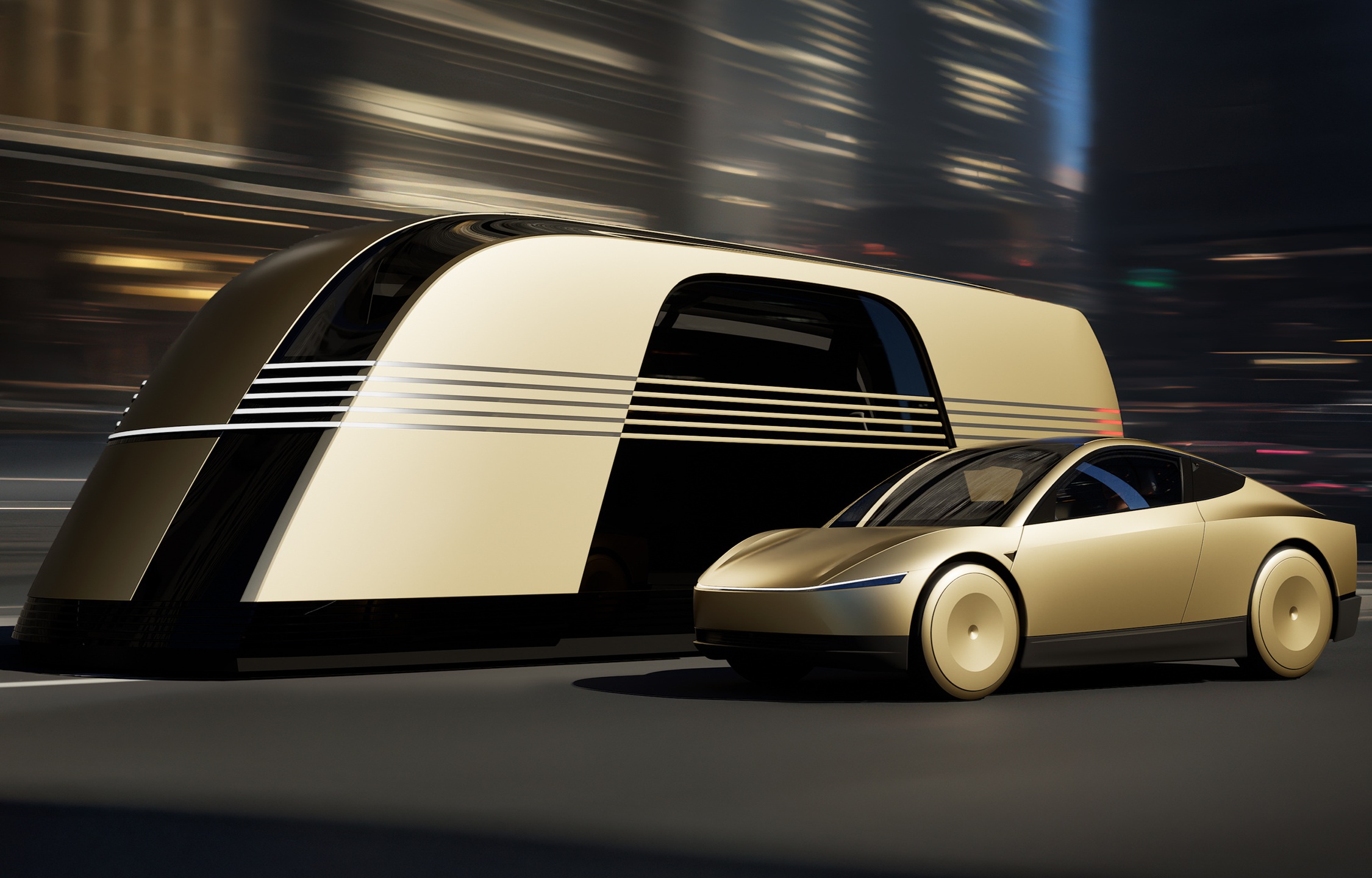
Tesla has introduced refreshed versions of its Semi truck and Cybercab vehicles while delaying the long-anticipated Roadster 2 launch to 2027. The company said it plans to begin mass production of the Cybercab in April, producing one vehicle “every 10 seconds or so” — roughly four times faster than a Model Y.
The updated Cybercab, which will operate without pedals or a steering wheel, is designed for Tesla’s expanding Robotaxi network, set to reach new U.S. cities including Miami, Dallas, Phoenix and Las Vegas. “By then, most major U.S. cities will be covered by its Robotaxi platform,” Tesla said in its presentation. The autonomous fleet is part of Tesla’s broader effort to integrate AI-powered mobility services into its operations.
See also: Tesla Revives Low-Cost Model 2 Project and Plans Cheaper Versions of Model Y and Model 3
Tesla also revealed a major design overhaul for its Semi truck, which will enter production in 2026. The refreshed model will feature a new light bar, higher payload capacity, and 15% greater efficiency, achieving 1.7 kWh per mile. Charging speed has been raised to 1.2 MW — the maximum output supported by Tesla’s V4 Supercharger stations using the NACS standard.
During its 2025 Annual Shareholder Meeting, where 70% of shareholders approved CEO Elon Musk’s $1 trillion compensation package, the company confirmed that the Roadster 2 supercar will be officially unveiled on April 1, 2026. A limited demonstration will take place later this year, with Musk claiming the vehicle will be able to “fly.” Mass production is planned for the following year.
See also: XPeng’s Humanoid Robot Iron Stuns Audience With Lifelike Movements at Live Debut
Tesla is also ramping up production of its Optimus 3 humanoid robots, with output set to begin in 2026 at its Fremont facility. “Tesla and Chinese companies will dominate the market,” Musk said, referring to the growing competition from manufacturers such as XPeng. To meet the rising demand for chips and batteries, Tesla announced its lithium refinery — capable of 50 GWh annual capacity — will open next year. Musk added that the company may need to construct its own AI chip foundry, describing the plan as a “Tesla terafab… like giga, but way bigger.”